Do You Really Need a Condo Inspection? A Complete Guide for Buyers
Yes, a condo inspection is a crucial step in protecting yourself from unexpected repairs and hidden liabilities inside your home.
Buying a condo can be a smart investment—offering lower maintenance and access to shared amenities without the upkeep of a single-family home. But assuming the homeowners association (HOA) covers everything could leave you vulnerable to unexpected repairs and hidden liabilities inside your unit.
That’s why a condo inspection is a critical step in protecting your investment. A professional inspection helps uncover hidden defects, safety hazards, deferred maintenance, and potential red flags that may not be visible during a standard showing. It gives you leverage in negotiations and clarity about what you are truly purchasing.
In this Redfin article, we’ll break down exactly why a condo inspection matters, what inspectors do and look for, and how to red flags before signing on the dotted line.
We were featured in a Redfin article!
Do You Really Need a Condo Inspection? A Complete Guide for Buyers
It’s a common misconception that the HOA takes care of all maintenance and repairs in a condo—which leads many buyers to think an inspection isn’t necessary. But overlooking a condo inspection can be a costly mistake.
“Protecting your investment should be the key to any purchase,” shares Mark Hughes, owner of Chicago-based home inspection company, Domicile Consulting. “Understanding the condition of the building and the health of the HOA is critical so there are no surprise assessments that could reduce the value of your unit or put you in a financially burdensome position.”
Clarifies maintenance responsibilities: An inspector will explain which repairs fall under your HOA’s jurisdiction and which are yours.
Protects your investment: Knowing the true condition of the unit can help you avoid buying a property that turns into a money pit.
Strengthens negotiation power: If issues are discovered during the inspection, you may be able to negotiate a lower purchase price or request repairs before closing.
Reveals poor past maintenance: Inspections can expose shortcuts or improper fixes done by former owners.
Supports long-term budgeting: Understanding the current condition of appliances, HVAC systems, and plumbing can help you plan for future maintenance costs.
“Think a condo inspection is optional because the HOA handles maintenance?” questions Craig Iden, CEO of Golden State Inspections. “Think again. While the HOA usually covers the exterior, you’re responsible for everything inside. In 2026, protecting your investment starts with a professional look at all of the components of your home. Don’t skip the inspection. It’s the only way to ensure your “dream home” isn’t a financial nightmare.”
What does a full condo inspection include?
A full condo inspection goes far beyond a quick glance at finishes and fixtures. It’s a detailed evaluation of everything inside your unit—and sometimes just outside it—that could impact your safety, comfort, and future expenses.
Cameron Chambers, General Manager at HomeGuard Incorporated, says, “While the HOA typically maintains common areas and exterior elements, inspectors will still identify utility shut-offs and note any visible exterior components that affect the unit. Just like a single-family home, a condo can have hidden issues, and an inspection helps buyers understand which repairs they may need to address and which fall under their responsibility before closing.”
Here’s what a full condo inspection usually covers:
Interior of the unit
Walls, ceilings, and floors for cracks, stains, or signs of structural issues
Water damage or leaks, especially around kitchens, bathrooms, and windows
Windows and doors for proper operation, sealing, and signs of deterioration
Common areas adjacent to your unit—such as hallways or stairwells—for signs of neglect or potential future expenses
This is a general overview of what a condo inspection typically includes, but requirements can vary depending on your state. In some cases, inspectors may need to cover additional areas. If you’re applying for an FHA loan, keep in mind that the Department of Housing and Urban Development (HUD) has its own specific inspection guidelines for condominiums.
How much does a condo inspection cost?
Condo inspections are typically less expensive than full home inspections because they focus on the interior of the unit rather than the entire structure. On average, you can expect to pay between $200 and $500, depending on your location, the size of the unit, and any additional services you may request—such as mold, radon, or sewer line testing.
Condo inspection checklist: What inspectors look for
A condo may look clean and move-in ready on the surface, but only a professional inspection can reveal what’s beneath the surface. The goal is to evaluate the unit’s overall condition, identify safety concerns, and uncover any signs of damage, wear, or poor maintenance.
Here’s what an inspector focuses on:
Structural and safety concerns
Cracks in walls, ceilings, or flooring
Water stains or signs of leaks (past or present)
Mold or mildew, especially in bathrooms and around windows
Damaged or missing smoke and carbon monoxide detectors
Worn-out or unstable stair railings
“In condominium buildings, demising walls are designed to limit the spread of fire, smoke, moisture, and sound between units,” states James Jones III, Licensed Certified Master Inspector at Home Commercial Inspections. “A common hidden issue is when these walls don’t extend continuously from the lowest level to the roof. Gaps can increase safety risks, property damage, and even affect insurance or liability.”
Plumbing and water systems
- Low water pressure or slow drainage
- Leaky faucets, pipes, or fixtures
- Water heater condition and functionality
- Signs of previous water damage under sinks or behind appliances
Electrical systems
- Working outlets, switches, and light fixtures
- Electrical panel condition and proper labeling
- Grounding and potential fire hazards
- Adequate GFCI protection in kitchens and bathrooms
Heating, cooling, and ventilation
- HVAC system performance (interior and exterior units if applicable)
- Thermostat function and air flow throughout the unit
- Proper ventilation in bathrooms, kitchen, and attic spaces (if present)
Interior condition and general maintenance
- Window and door functionality, sealing, and hardware
- Appliance operation (if included in the sale)
- Caulking and grout condition in kitchens and bathrooms
- Signs of DIY repairs or neglected maintenance
- Flooring wear and any trip hazards
- Presence of unpleasant odors, which could indicate mold, moisture, or pests
Tim Wojnar at Home Inspection Geeks shares, “When buying a condo, it’s important to know what’s yours and what’s shared. A condo inspection focuses on your unit—walls, appliances, plumbing, and electrical—while the association handles common areas. It helps uncover hidden issues early and clearly defines your repair responsibilities.”
Shared or adjacent areas
Condition of shared walls for soundproofing or damage
Decks, patios, or balconies attached to the unit
Entry points to garages, attics, or basements (if part of the unit)
Before scheduling an inspection
Before you jump into scheduling a condo inspection, there are several important steps you can take to better prepare yourself and protect your investment.
Review the HOA’s reserve study and meeting minutes
Ask for the condo association’s most recent reserve study and a year’s worth of meeting minutes. These documents can reveal whether the building is well-maintained and financially stable. Meeting minutes can also shed light on the community dynamic, including neighbor disputes or ongoing complaints.
Ask about special assessments
Special assessments are additional fees charged to condo owners to cover unexpected repairs or upgrades. Ask if any have recently been issued or are planned in the near future. Knowing this in advance can help you avoid surprise expenses down the road. A potential special assessment doesn’t necessarily mean a condo is a bad investment. Some HOAs keep monthly dues low and rely on occasional assessments to cover major repairs.
Learn what the monthly dues are
While low monthly dues may seem like a perk, they can be a red flag—especially if reserve funds are low or maintenance has been deferred. These signs could point to future costly assessments, so be sure to review the HOA’s finances and let your inspector know what to look for.
Understand what the HOA is responsible for
HOAs typically handle repairs and maintenance for shared spaces like roofs, hallways, and exterior walls—but exactly where the HOA’s responsibility ends can vary. Make sure you understand what’s covered by the HOA dues and what falls under your responsibility, so you know what your condo inspection should focus on.
Review the condo’s master insurance policy
Not all damage will be covered by your personal condo insurance. The HOA’s master insurance policy usually covers the building structure and common areas, but there may be gaps that affect your unit. Reviewing this policy can help you determine whether you need additional coverage and avoid costly surprises after closing.
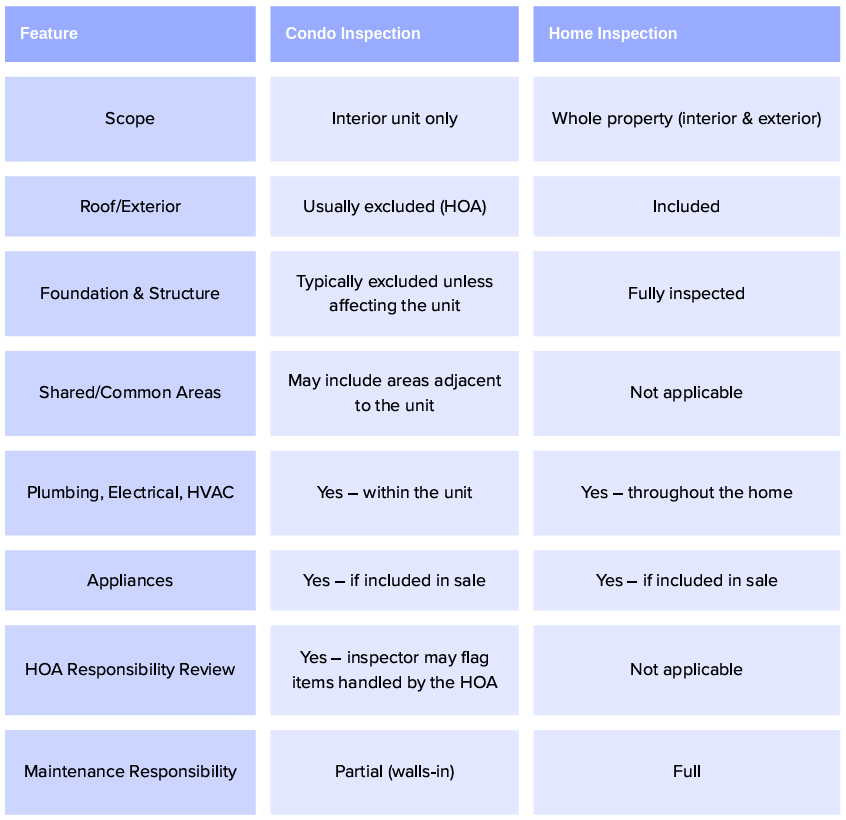
Condo inspection vs home inspection: A quick comparison
Protect your investment with a condo inspection
A condo may come with fewer maintenance responsibilities than a traditional single family home, but that does not mean it is free of risk. Shared walls, shared systems, and shared governance introduce a different set of considerations that buyers need to understand. While the HOA may handle exterior maintenance and common areas, the interior condition of your unit, the quality of prior renovations, plumbing lines, electrical components, appliances, and HVAC systems can still present significant financial exposure. Without a thorough inspection, hidden issues such as moisture intrusion, aging mechanical systems, improper installations, or safety concerns can go unnoticed until after closing.
Taking proactive steps, including scheduling a professional condo inspection, gives you clarity and negotiating power. An inspection provides an objective assessment of the unit’s condition and can reveal deferred maintenance or defects that may not be visible during a walkthrough. It also helps you better understand what is your responsibility versus what falls under the HOA’s scope, allowing you to budget appropriately and avoid unexpected out of pocket expenses.
Ready to take the next step? Connect with a trusted real estate agent who understands condo transactions and can guide you through the buying process from offer to inspection to closing. With the right professional support and a thorough inspection, you can move forward confidently, knowing you are investing in a condo that aligns with both your financial goals and long term peace of mind.
FAQs about condo inspections
What is a condo inspection?
A condo inspection is a professional evaluation of the interior condition of a condominium unit. The goal is to identify any current or potential issues before the buyer finalizes the purchase.
Do I really need a condo inspection if the HOA covers maintenance?
Yes. While the HOA covers common areas, issues inside your unit—like plumbing, electrical, or HVAC—are your responsibility. A condo inspection helps uncover those potential problems.
Who pays for the condo inspection—the buyer or the seller?
In most cases, the buyer pays for the condo inspection. It’s a valuable step to protect your investment and identify issues before closing.
Can I waive the condo inspection to speed up the buying process?
While it’s possible, skipping an inspection can be risky. Without it, you might miss hidden issues that could cost thousands down the line.