Infrared Thermographic Surveys
Inspecting Your Building with Infrared Thermal Technology
Why Choose Home & Commercial Inspections, LLC?
We produce comprehensive, high-quality, detailed, and easy-to-read fully certified infrared inspection reports in Columbus, Ohio. We are Level II IR trained and qualified inspectors, and we’ve scanned thousands of items of electrical equipment with infrared technology.
We inspect schools, hospitals, apartments, universities, hotels, and commercial and industrial facilities in Columbus, Ohio.
Incorporate our findings into your preventative maintenance program or supply your insurance company with a detailed and thorough report from Home & Commercial Inspections, LLC.
What is Infrared Thermal Imaging?
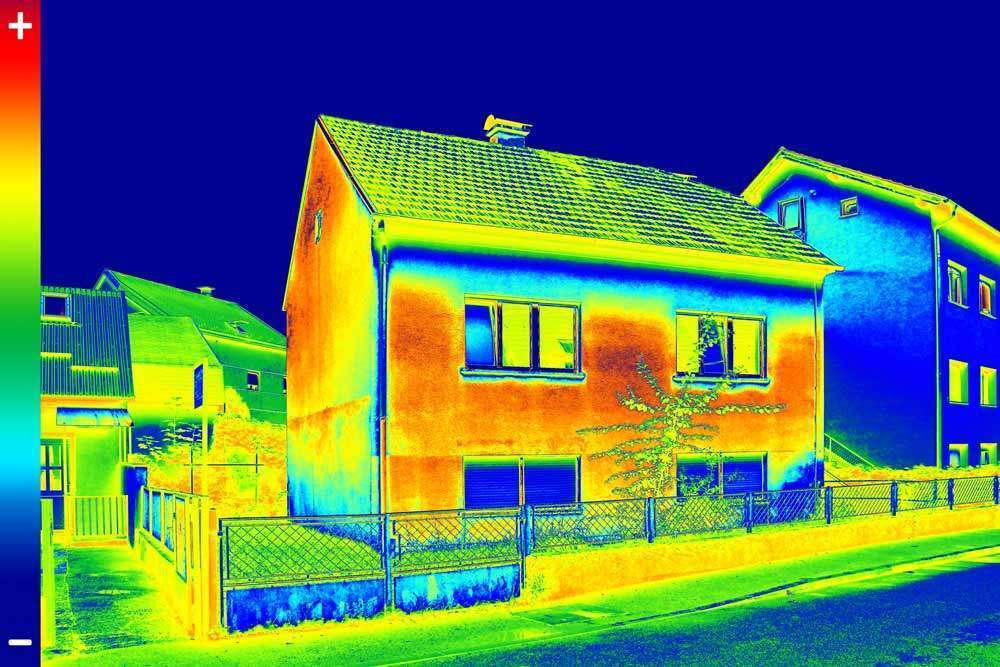
Infrared thermal imaging, often known as thermography, is the process of using a thermal camera to measure temperature fluctuations. Heat gives off infrared light, which is on the part of the electromagnetic spectrum that isn’t visible to the naked eye. Thermal cameras take pictures of heat in the same way a normal camera takes a photo of light. By converting infrared (IR) radiation (heat) into easily decipherable images, inspectors can assess the distribution of temperature on a surface.
Solid barriers such as walls, roof beams, and bulky furniture have no effect on the results of thermal cameras since they disregard the visible light portion of the spectrum.
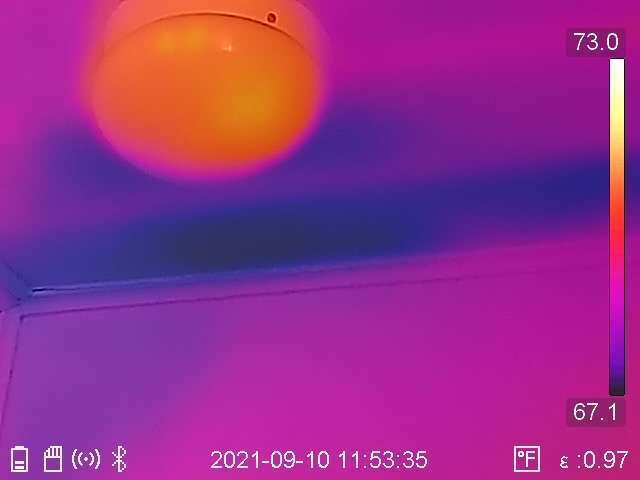
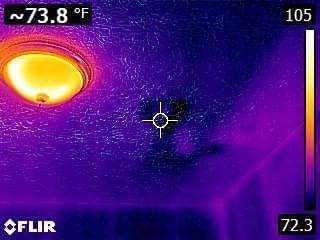
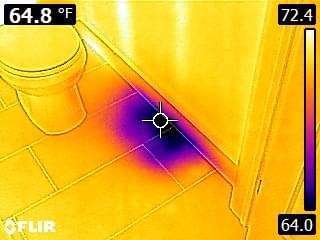
The results appear as colors. Generally, objects that are lighter in color are warmer, while darker objects are cooler:
- Purple for cool
- Red for medium
- Yellow for hot
What Will Infrared Thermal Imaging Detect?
Non-destructive testing (NDT) with infrared thermography is a powerful method in the commercial and industrial sector in Columbus, Ohio. It’s ideal for inspecting and troubleshooting a variety of building issues, including electrical equipment, roof leaks, moisture incursion, mechanical systems, and energy loss. Anomalies can be detected without the need to knock down walls, puncture ceilings, or put holes in roofs. An inspection can:
- Find hidden plumbing leaks in walls, ceilings, roofs, and floors
- Assess your building’s thermal performance
- Assess the weathertightness of your home
- Document whether appliances, such as water heaters, range tops, refrigerators, are working
- Check whether wall and ceiling insulation is missing or damaged
- Find “HOT” electrical circuits
- Find insect and vermin locations and infestations (e.g., ants, termites, bees, wasps & rodents)
- Reveal wet areas hidden by carpet
- Detect water behind drywall
- Reveal condensate overflow
- Detect water in exterior cladding
- Show up pet toileting areas
- Find water in walls from leaking windows
- Detect leaking ductwork
- Find flue leaks and identify dangerous backdrafts that could cause carbon monoxide poisoning
- Reveal heat loss from poor weatherstripping, broken seals, structural defects, or air leaking from the ceiling, air conditioning, or heating system
- Test electrical panels and look for overloaded circuits, old circuit breakers, electrical faults, and overheated electrical equipment.
What Does an Inspection Involve?
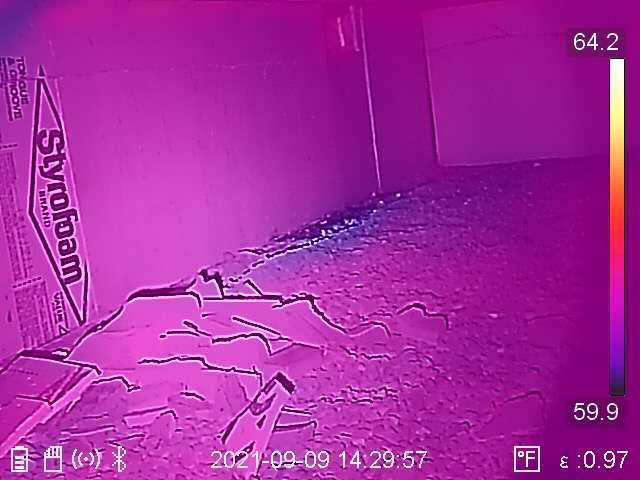
Our sensitive infrared cameras will scan the area to detect and record sources of heat. Any areas of concern are identified and labeled right away.
We will thoroughly explain the technology to you, so you can understand exactly how the thermal imaging works. We can also provide follow-up inspections after repairs are done (for an additional fee); however, we cannot offer to make the repairs.
Thermographic Tools
- Spot radiometer (point radiometer): Measures radiation when pointed at an area. Mostly used for evaluating tools and equipment.
- Thermal line scanner: Shows radiant temperatures along a line. When the scan is superimposed over a picture of the area, it detects whether temperature is homogeneous.
- Thermal imaging camera: Produces a two-dimensional thermal image. The most sensitive tool for a home energy audit.
How Do You Process the Images?
We record all our images and save them digitally on site for later analysis. Images may be enhanced to be more easily assessed, adjusting for color, brightness, and contrast. Images are shown alongside a “normal” photo to help you understand the infrared image and identify the problem areas.
All reports are issued as high-resolution, high-quality printouts. We also provide digital copies.
How Do I Prepare for a Thermal Imaging Inspection?
- Be sure to set your air conditioning or heat to a difference of 20 degrees Fahrenheit (14 degrees Celsius), if possible.
- Take curtains and drapes down from the windows and move furniture away from exterior walls.
Home Inspections
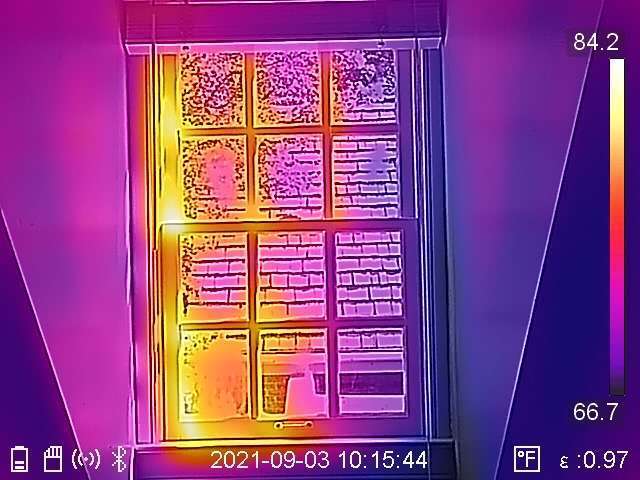
Our team will check for hidden water in walls, ceilings, and floors from faulty plumbing or window leaks and other sources, as well as evaluate if equipment such as water heaters, range tops, and refrigerators are operating correctly. These have thermal variances that an infrared camera will easily detect.
We also examine whether your home’s walls and ceilings are properly insulated—gaps in insulation show up as cool zones—and whether it is weathertight or has drafts causing heat loss and energy inefficiency.
Our thermal infrared cameras will uncover potentially dangerous faulty electrical circuits in your home. We can also look for insect and rodent infestations—nests of ants, termites, bees, rats, or mice show up as hot zones behind the wall, under the floor, or in the roof.
Thermal Infrared Roof Moisture Survey
Finding moisture or heat loss problems in a roof is an essential factor to consider when assessing maintenance requirements and building value, whether you are an investor, seller, roofing business, or facilities or property manager.
Performing a roof moisture survey means repairs are more cost-effective because you are targeting only the wet and damaged areas, rather than the whole roof. Our report can be sent to your roofing professional who will recommend an appropriate and tactical solution to replace or repair the problem section.
Our detailed and professional reports document any trapped roof moisture, exposing damp areas and revealing defects so you can explore your repair options. Our reports are also used for pre-coating inspections to confirm that roof substrates are dry before being painted or coated—preventing blistering and peeling—and to ensure that warranties are maintained. Roof moisture surveys are also used for prepurchase inspections.
Low-Slope Roof Inspection
In just a few years, some low slope roofs with a modest pitch to allow for drainage can develop issues. An infrared inspection will assess the condition of your roof.
Low slope roofs in Columbus, Ohio, are made up of a structural deck, insulation, and waterproof membrane. Leaks in the membrane and the resulting trapped moisture can be very costly, causing damage and potential failure of the roofing system.
An infrared roof inspection will reveal any damp areas. These areas of concern can then be removed and rebuilt, extending the roof’s life expectancy, saving money, and guaranteeing safety.
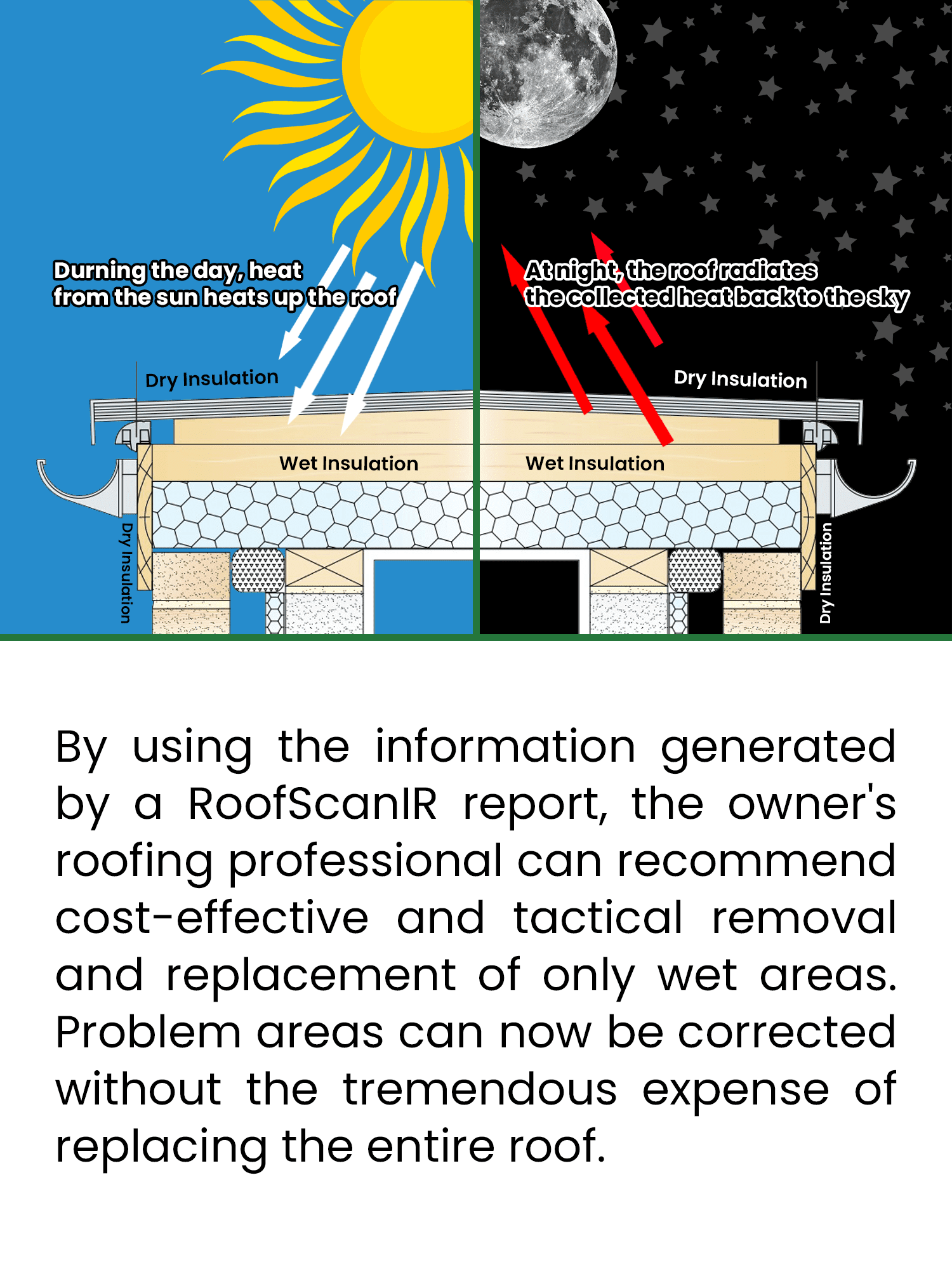
Benefits of an Infrared Roof Survey
- Quickly find moisture in insulation
- Eliminate the need to replace the whole roof
- Extend the life of the roof
- IR scans are non-destructive
- Reduce maintenance costs
- Verify absences of moisture for warranty purposes
How Do Thermal Infrared Roof Scans Work?
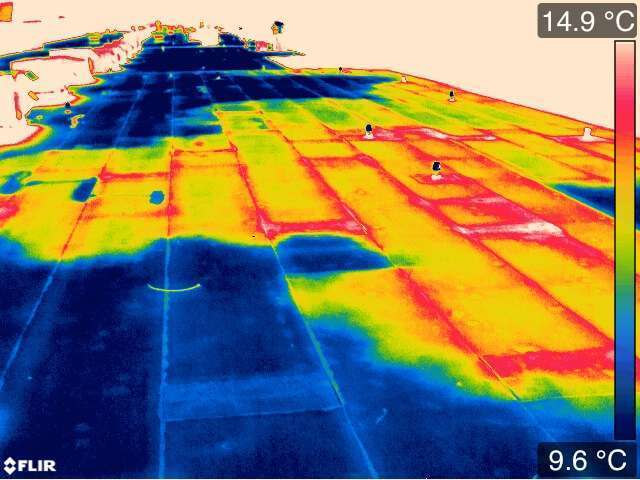
When the sun shines on the roof or other surfaces during the day, those substrates then radiate heat back at night in a process called radiational cooling. The heat is retained for longer in areas that have a large wet mass than in those areas that are dry. Infrared imagers detect the heat and reveal any uneven heat dissipation, showing up otherwise invisible problem damp areas.
Because wet insulation’s mass is higher than dry insulation, when the roof cools, areas of wet insulation will stay warmer for longer and are easy to spot with the thermal camera. These areas of moisture are then marked for confirmation or removal.
The time it takes to conduct a survey is determined by the size of the roof and the number of warning signs detected. When conditions are ideal, a scan can last for several hours. The roof must be dry and clear of debris.
Thermal Infrared Electrical Inspection Services
Thermal infrared electrical imaging is perfect for inspecting electrical systems because it is fast, non-invasive, non-destructive, and non-contact.
Regular infrared electrical inspection can check panels, switches, disconnects, motors, bus ducts, and MCC.
How Does an Infrared Electrical Survey Work?
An infrared electrical scan will detect temperature anomalies invisible to the naked eye, picking up problems that can be missed through a purely visual inspection. When equipment is under normal loads, but components show different temperatures, this can indicate an anomaly.
Because of the dangers of arc flash, which can occur when voltage exceeds 480 V, only qualified people should open and seal equipment to take readings. In certain situations, infrared windows can be placed on hard-to-reach or dangerous equipment that requires frequent infrared scans.
Why Perform an Infrared Electrical Survey?
Infrared scans can minimize damage, address and correct safety and operation hazards, prevent downtime, save money, and protect employees.
The National Fire Protection Association (NFPA) advises all commercial and industrial buildings should undergo an infrared survey at least once a year. The General Services Administration (GSA) recommends annual infrared inspections, and many insurance companies also require infrared checks of electrical and mechanical systems.
Infrared Aerial Imaging Using Drones
We’ve made commercial and industrial inspections more effective using drone technology and infrared thermography in Columbus, Ohio.
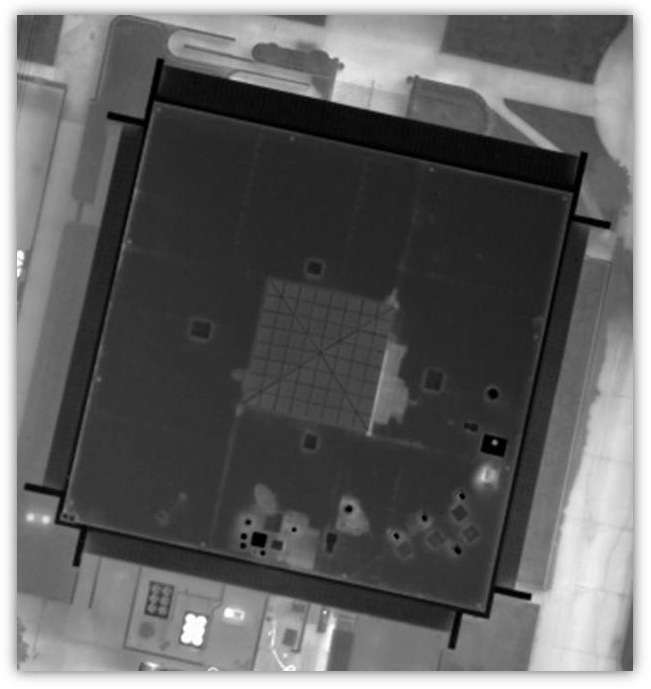
Drones Map Moisture in Large Roofing Systems
Commercial roofing systems can absorb and trap moisture, causing issues over time. The sun heats the roofing material throughout the day, and as it sets, the roofing material cools. Because of their higher mass, wet regions stay warmer for longer and are easily seen by our infrared imaging.
Many buildings with large roofs, such as shopping centers and shopping malls, universities and schools, and large commercial buildings, have limited access and multiple surfaces, so thermal infrared with an unmanned aerial vehicle (UAV) is a safe and effective way to scan these areas.
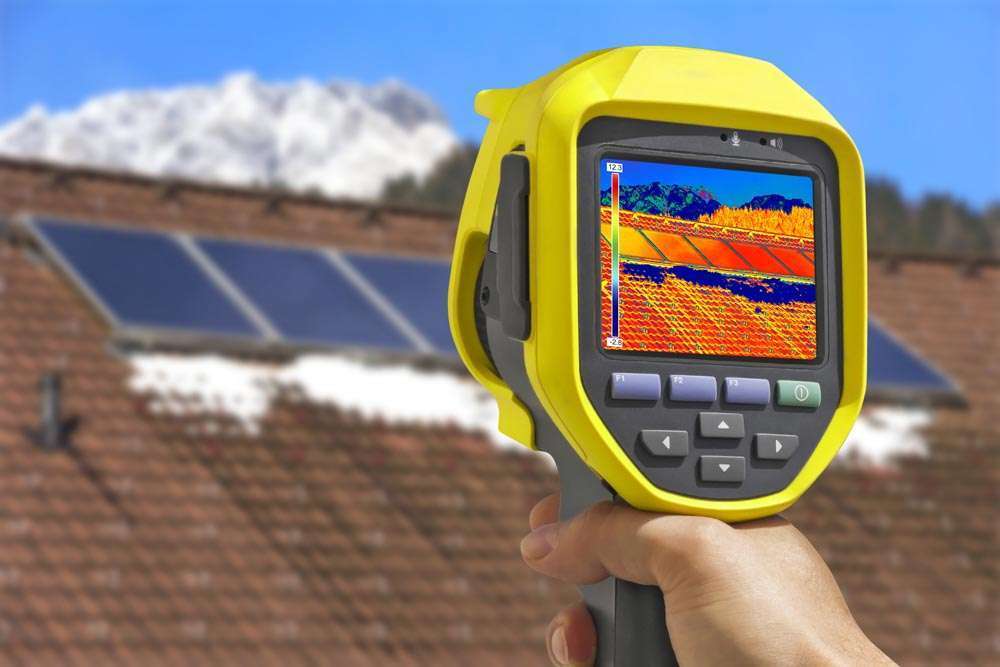
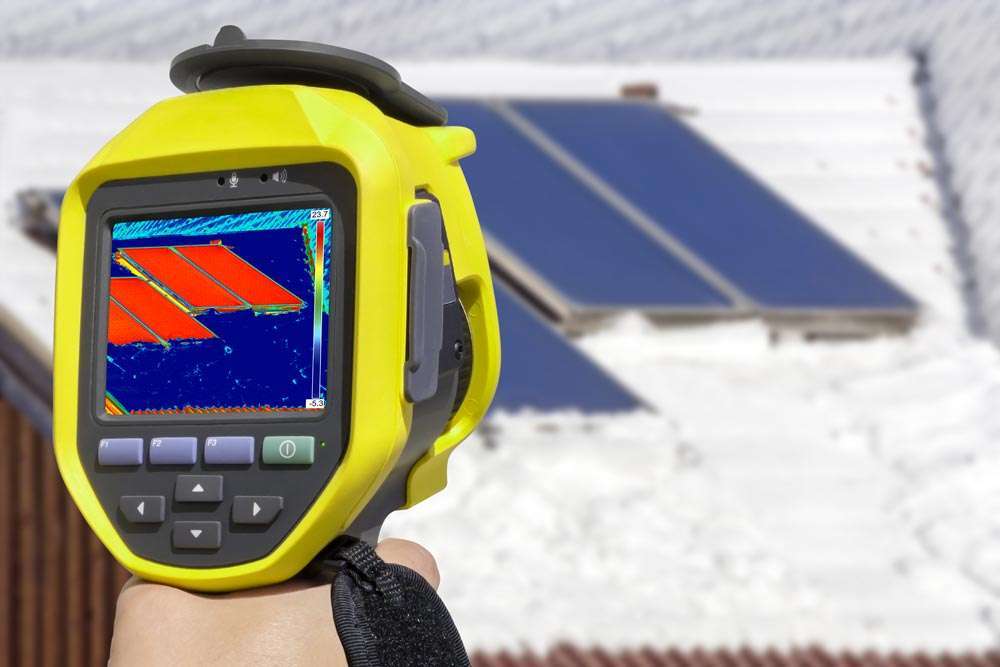
Scanning for Anomalies in Solar Panel Systems
An aerial scan can check individual panels and detect overheating cells that hinder system performance.
Safer Inspections of Difficult Structures
Drones are an ideal way to inspect communication towers safely and quickly, eliminating the need for personnel to climb these structures.
Drones can monitor building construction and repairs while avoiding the need for scaffolding, improving safety, and saving time and money.
Bridges can be inspected without diverting traffic or using other costly access.
What Does Thermal Imaging Not Do?
- Thermal imaging does not “see” through walls—it is not x-ray vision. It is a surface-level inspection that translates heat into the visible spectrum, finding unseen issues which are indicated by heat discrepancies.
- A thermal imaging device is not a moisture meter. It only detects heat emanating from excess moisture in an area.
- A thermal imaging scan does not distinguish between normal and abnormal heat fluctuations, such as normal heat from an HVAC system.