What a Columbus & Central Ohio home inspection reveals about wood siding, stucco, fiber cement, masonry, moisture damage, installation problems, and the warning signs worth asking about.
During a Columbus or Central Ohio home inspection, siding is evaluated for visible damage, moisture intrusion, installation problems, and deterioration. A home inspection doesn’t replace specialized siding or stucco testing. It identifies visible red flags (wood rot, cracked stucco, damaged fiber cement, deteriorating masonry, and faulty flashing) and tells you when a qualified specialist should take a closer look before you close.
Home siding is the exterior covering that protects a home’s walls from weather exposure while contributing to its appearance and overall durability. Whether a house has traditional wood boards, stucco, fiber cement panels, or masonry, the siding serves as the first line of defense against rain, wind, sunlight, and the seasonal temperature changes that affect homes throughout Columbus and Central Ohio.
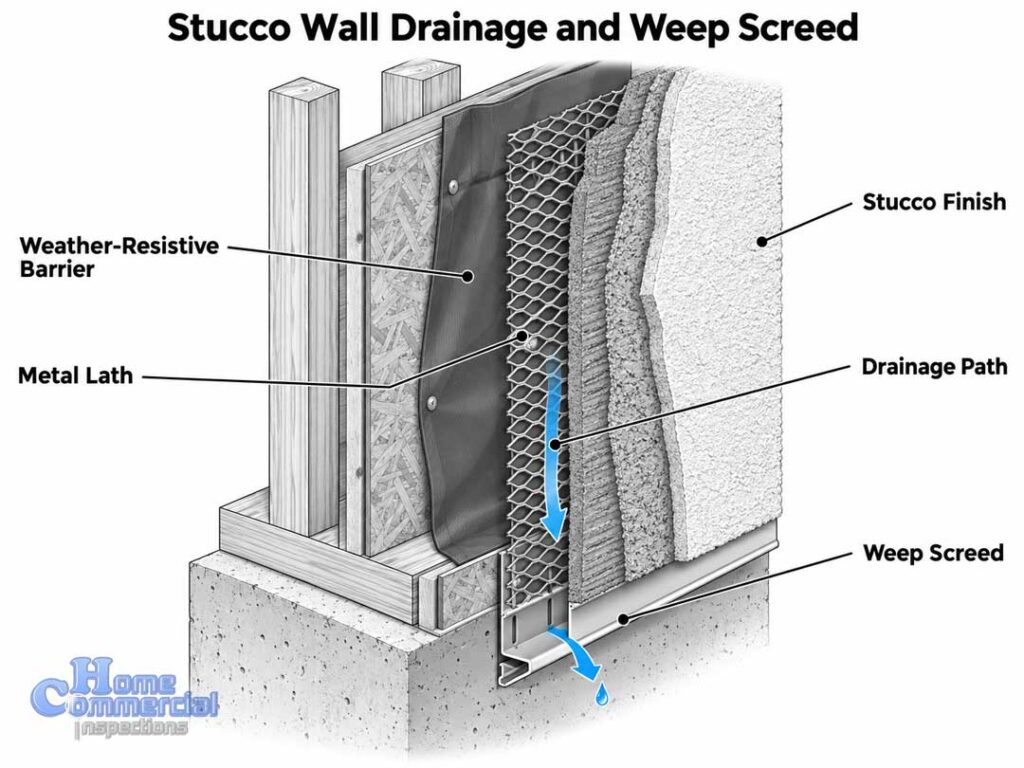
Although siding is often associated with curb appeal, its most important function is helping the exterior wall manage moisture. Most modern wall assemblies consist of several layers, including the visible siding, flashing, a weather-resistive barrier, exterior sheathing, and structural framing. These components work together to direct water away from vulnerable areas and prevent excessive moisture from reaching the materials behind the finished exterior.
When rain strikes the siding, much of the water runs down the surface and away from the building. However, siding is not necessarily a completely waterproof barrier, which is why properly installed flashing, drainage provisions, and concealed weather-resistive materials are essential. If water enters through an opening or damaged joint, the wall assembly should be designed to manage that moisture and allow it to drain or dry before deterioration develops.
The weather in Central Ohio places considerable demands on exterior materials. Hot, humid summers, periods of heavy rainfall, freezing winter temperatures, and repeated freeze-thaw cycles can gradually affect siding, sealants, and masonry. Materials naturally expand and contract with temperature changes, while repeated moisture exposure can accelerate deterioration where installation or maintenance problems already exist.
Because these conditions can affect more than the visible exterior, a home siding inspection considers the condition of the siding alongside flashing, trim, drainage, and other accessible components. Understanding how these parts work together helps buyers recognize why a minor-looking crack or damaged board may deserve closer attention, particularly when there are signs that water has been reaching the wall behind it.
During a home inspection, the inspector examines accessible and observable exterior wall coverings to identify visible damage, deterioration, installation deficiencies, and conditions that may allow moisture to enter the building. The inspection considers the type of siding installed, its general condition, and how it interacts with surrounding components such as windows, doors, trim, roofing, and exterior drainage.
Depending on the siding material, accessibility, and construction of the home, an inspection may include observations of:
HC Inspectors evaluates exterior wall coverings, flashing, and trim as part of a complete home inspection rather than treating the siding as an isolated component. This approach is consistent with the American Society of Home Inspectors (ASHI) Standard of Practice, which includes the examination of accessible exterior wall coverings, flashing, and trim.
However, a standard home inspection is not the same as a specialized building-envelope investigation or invasive moisture assessment. Important components such as the weather-resistive barrier, wall sheathing, concealed flashing, and structural framing may not be visible without removing finished materials. Inspectors generally do not remove siding, penetrate stucco, or open wall cavities during a standard visual inspection.
When an observable condition raises concerns about concealed damage or structural movement, the inspection report can help buyers understand why further evaluation by a qualified siding contractor, stucco specialist, masonry professional, or structural engineer may be appropriate before closing.
Siding problems can range from ordinary maintenance concerns to defects that allow moisture to reach concealed wall components. The type of material, quality of installation, and history of weather exposure all influence how problems develop and whether repairs involve only the siding or the structure behind it.
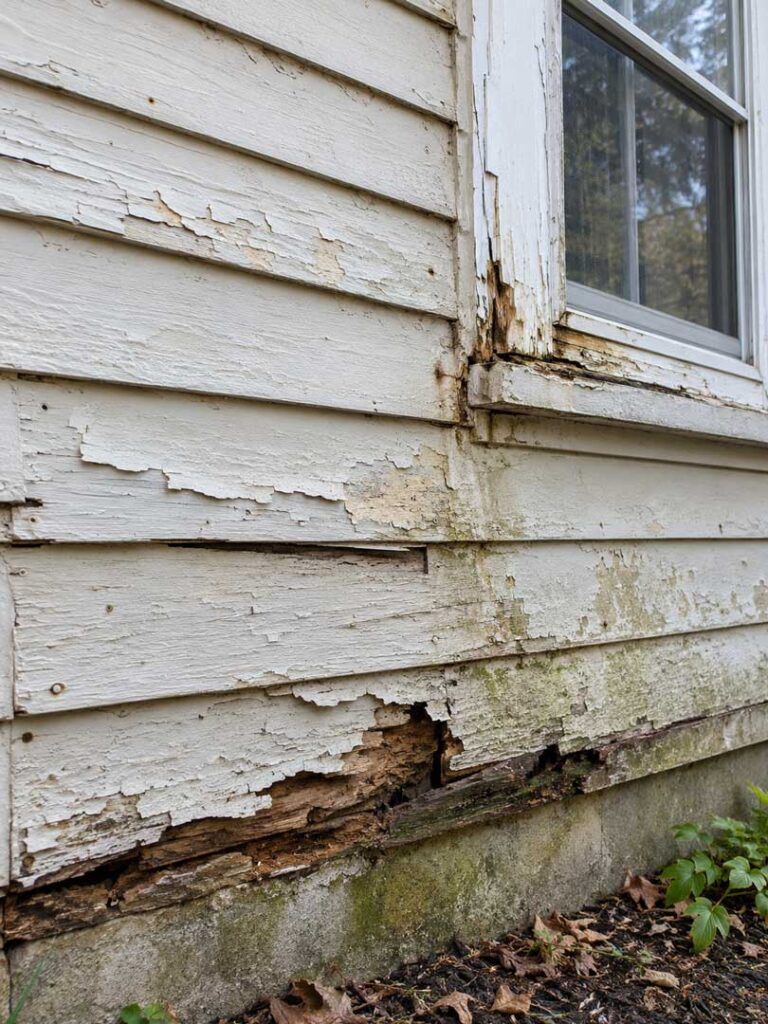
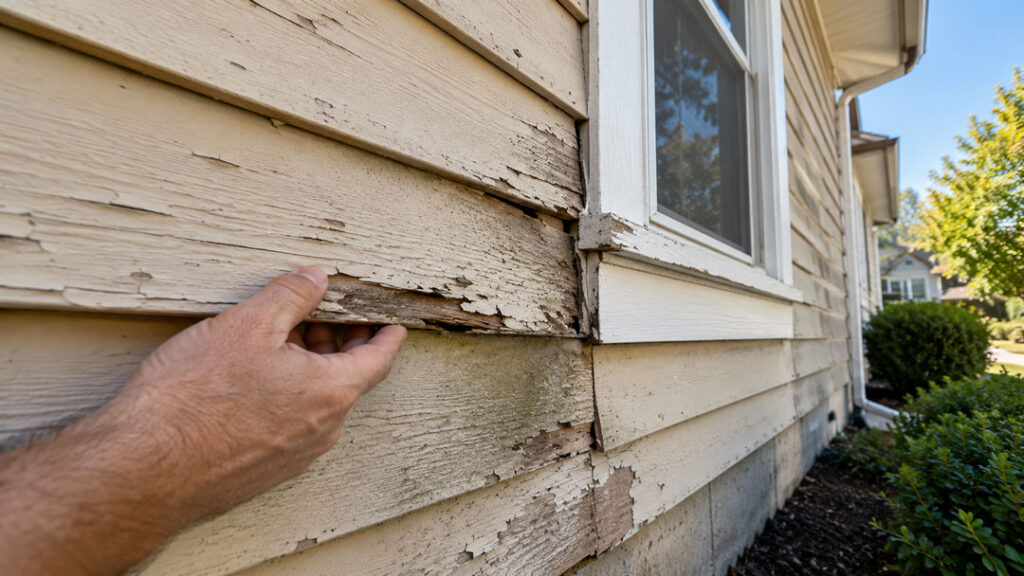
Wood siding provides a traditional appearance, but it requires regular maintenance because prolonged moisture exposure can cause boards to warp, soften, split, or decay. During a home inspection, inspectors look for rotting wood, loose boards, peeling paint, and deterioration around windows, trim, roof intersections, and areas near the ground where moisture tends to accumulate.
Paint condition can provide important clues about the siding’s performance. Although fading and peeling may result from normal weathering, repeated paint failure or visibly softened wood can suggest a moisture problem. A qualified professional may use careful probing to investigate suspected decay, particularly where the damage appears to extend beneath the surface.
A few damaged boards can often be repaired or replaced without removing an entire siding system. However, widespread rot or recurring moisture problems may require more extensive repairs, especially when water has affected the sheathing or framing behind the siding.
Stucco is a durable exterior finish when properly installed, but moisture problems can develop when flashing, drainage, or installation details allow water to enter the wall. One concern with stucco is that damage may occur behind the finished surface without producing obvious exterior symptoms, particularly around windows, doors, and roof intersections.
Inspectors look for cracking, staining, efflorescence, deteriorating sealants, bulging, and missing or improperly installed flashing. Small surface cracks do not automatically indicate serious damage, but larger cracks accompanied by staining or separation may suggest that further investigation is needed.
Because a standard home inspection cannot confirm the condition of concealed wall materials, suspicious stucco conditions may warrant specialized moisture testing before closing.
Some providers use the term Level 1 for a detailed visual evaluation of accessible stucco surfaces and installation components. This may include examining cracks, staining, window and door flashing, kickout flashing, sealants, expansion joints, and visible drainage provisions such as weep screeds.
The purpose is to identify conditions that could allow moisture intrusion, although a visual examination cannot determine the condition of every concealed component.
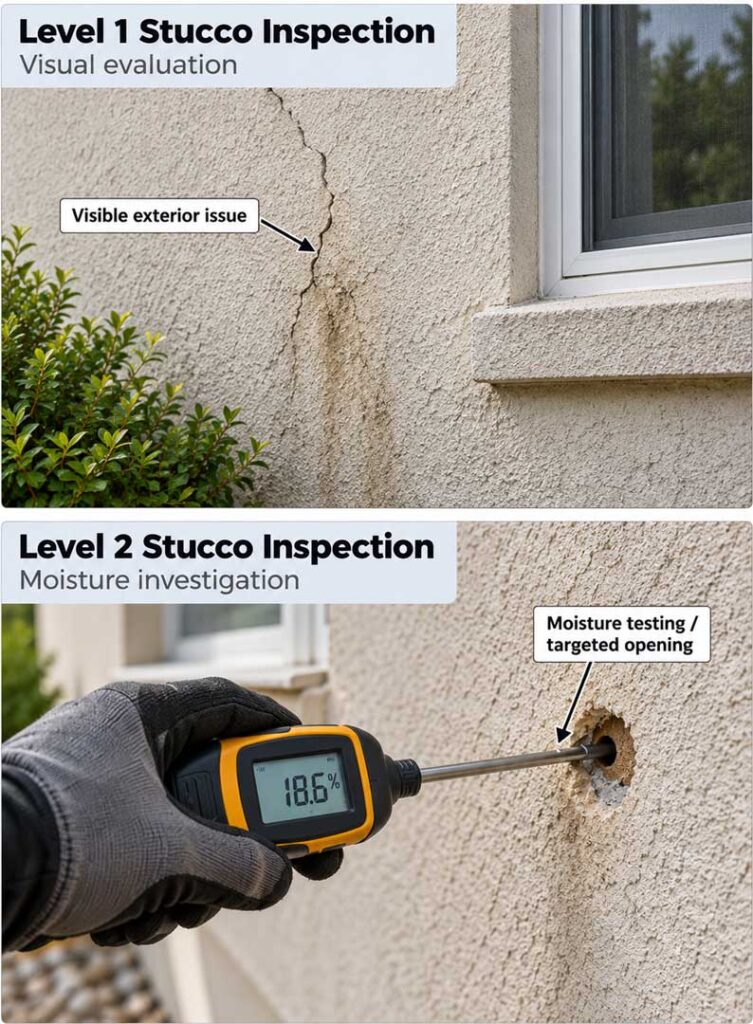
A Level 2 evaluation, as described by some stucco inspection providers, may involve specialized moisture measurements, probes, or targeted openings to investigate suspected damage behind the exterior finish. These procedures can help determine whether concealed materials have been affected by moisture and whether additional repairs are necessary.
Because Level 1 and Level 2 are not universal inspection classifications, buyers should confirm the procedures and scope with the specialist. Invasive testing also requires the property owner’s authorization.
Fiber cement siding is valued for its durability and resistance to many forms of deterioration, but its performance depends on proper installation and moisture management. Problems can develop when boards are incorrectly fastened, installed too close to roofing or soil, or left with damaged edges and improperly detailed joints.
During an inspection, cracked panels, loose boards, insufficient clearances, and defective flashing may indicate installation deficiencies. Although fiber cement is generally durable, repeated moisture exposure can affect vulnerable areas and may also contribute to deterioration of the concealed sheathing or framing when drainage details are inadequate.
Manufacturers establish specific installation requirements that can affect siding performance and warranty coverage. When significant deficiencies are visible, further evaluation by a qualified siding contractor may help determine whether localized repairs or more extensive corrections are appropriate.
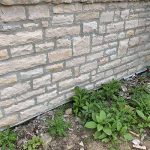
Brick, stone, and other masonry exteriors can provide many years of service, but cracking, displacement, and deterioration may develop because of temperature changes, moisture exposure, settlement, or inadequate support. Some cracks result from ordinary expansion and contraction, while others may indicate movement involving the foundation or surrounding structure.
Inspectors examine visible crack patterns, leaning or bulging walls, displaced masonry, and deterioration around windows, doors, and lintels. Stair-step cracking, widening gaps, or significant wall displacement deserve particular attention because these conditions may indicate more than normal material movement.
Corroded steel lintels and deteriorating support components can also cause masonry to crack or shift, while certain roof framing problems may exert outward pressure on supporting walls. When significant movement is observed, further evaluation by a qualified structural engineer or masonry specialist may be appropriate.
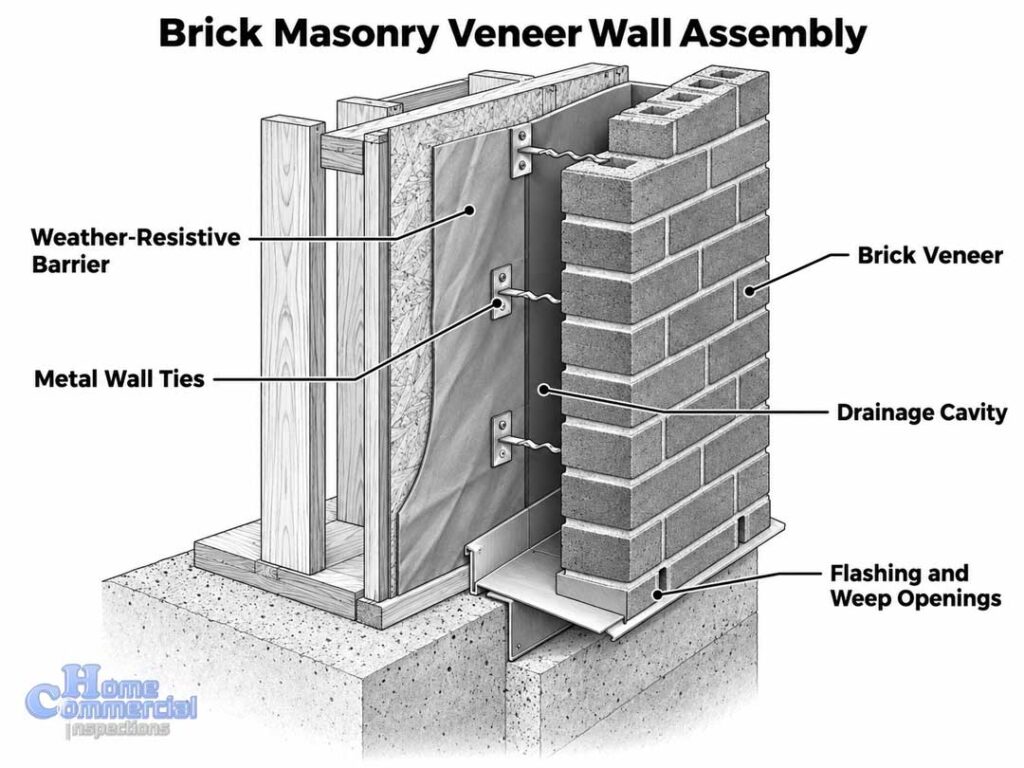
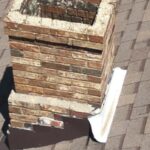
Masonry deterioration commonly appears as crumbling mortar, open joints, or spalling, which occurs when portions of brick or stone flake or break away from the surface. Repeated moisture exposure and freezing temperatures can contribute to these conditions, making freeze-thaw deterioration an important consideration for homes throughout Columbus and Central Ohio.
Deteriorated mortar may require repointing, a repair process that replaces damaged portions of mortar joints with compatible material. However, using mortar that is too hard or otherwise unsuitable for older masonry can accelerate deterioration of the surrounding brick.
Improper cleaning and waterproofing treatments may also contribute to damage. Abrasive methods such as sandblasting can weaken certain masonry surfaces, while incompatible coatings may restrict drying and trap moisture. Repairs should address the source of deterioration rather than simply covering the visible damage.

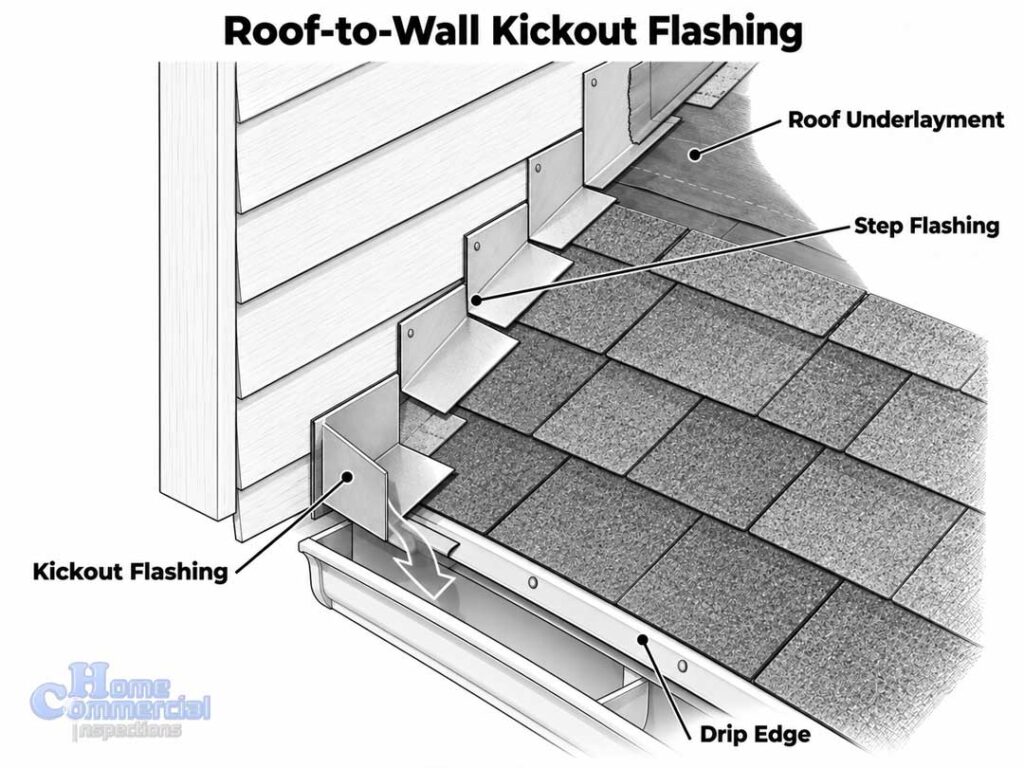
Flashing helps direct water away from vulnerable areas where siding meets windows, doors, rooflines, and other exterior components. When flashing is missing, damaged, or incorrectly installed, rainwater may enter behind the siding and affect materials that are not designed for prolonged moisture exposure.
One particularly important location is a roof-to-wall intersection, where kickout flashing directs roof runoff away from the exterior wall. Without proper water diversion, concentrated runoff can contribute to siding deterioration, damaged trim, and concealed wood rot.
Because much of a home’s flashing is hidden behind finished materials, a standard inspection cannot verify every installation detail. However, visible flashing deficiencies, water staining, and deterioration around openings can indicate areas where further evaluation may be necessary.
Moisture intrusion is one of the more significant siding concerns because damage may develop behind the finished exterior without being immediately visible. Water can enter through deteriorated joints, cracked materials, improper flashing, or openings around windows and doors, particularly when the wall assembly cannot drain or dry properly.
Over time, persistent moisture may contribute to rotting sheathing, deteriorating framing, damaged insulation, corroded fasteners, and mold-like growth. Inspectors may identify warning signs such as stained trim, warped siding, recurring paint failure, or interior moisture damage near exterior walls.
These observations do not necessarily establish the source or extent of concealed deterioration, but they can indicate when specialized investigation is appropriate. For home buyers, understanding a moisture problem before closing can help distinguish a relatively minor siding repair from a more extensive exterior wall restoration.

Siding problems can develop for a variety of reasons, and the visible damage does not always identify the underlying cause. Although normal aging and exposure to weather contribute to deterioration, improper installation, inadequate drainage, and neglected maintenance can create conditions that allow relatively minor defects to become more serious over time.
Common causes include:
For example, peeling paint on wood siding may result from ordinary weather exposure, but repeated paint failure in the same location can also suggest persistent moisture. Similarly, a crack in masonry may be associated with seasonal expansion and contraction, while a larger pattern of cracking and displacement could indicate foundation or structural movement.
The location and surrounding conditions often provide more useful information than the visible defect alone. Siding deterioration concentrated beneath a roof intersection may indicate a flashing or drainage concern, while widespread damage near the ground could be related to inadequate clearance or repeated exposure to moisture.
Understanding the likely cause is important because replacing damaged materials without correcting the underlying condition can allow the problem to return. A home inspection helps identify observable concerns so buyers can determine whether routine maintenance, localized repairs, or specialized evaluation may be necessary.
When viewing a home, buyers often pay attention to the appearance of the exterior without realizing that certain siding conditions may reveal more than ordinary wear. While a freshly painted surface can make a house look well-maintained, visible deterioration, unusual staining, and damaged flashing may provide important clues about how the exterior has performed over time.
Warning signs include:
These conditions do not necessarily indicate that the siding has failed or that major repairs are required. However, the combination of several warning signs, particularly those involving moisture, deteriorating materials, and defective flashing, may suggest that the problem extends beyond the visible surface.
Buyers should also consider whether exterior concerns correspond with conditions elsewhere in the home. Water staining near a window, for instance, may be connected to exterior flashing, while cracking in masonry could relate to foundation movement or other structural conditions.
A professional home inspection can help document these observations and identify when further investigation would provide useful information before the purchase is completed.
Siding affects more than the appearance of a home, particularly when deterioration or improper installation compromises the exterior wall’s ability to manage moisture. For buyers, understanding the condition of the siding can help clarify potential repair costs, maintenance responsibilities, and whether other building components may have been affected.

Exterior siding and flashing work together to protect the walls from rain, wind, and environmental exposure. When these materials are damaged or installed incorrectly, water may reach components that are not intended to remain wet, increasing the likelihood of concealed deterioration.

Persistent moisture intrusion can affect sheathing, framing, insulation, and other materials behind the exterior finish. When these materials remain damp, conditions may develop that support wood decay or mold growth, making it important to address both the visible damage and the source of the moisture.

Although many siding defects are limited to the exterior covering, significant water damage or masonry movement may affect structural components. Deteriorating wall framing, displaced masonry, or inadequate support can require more extensive evaluation than a routine siding repair.

Siding contributes substantially to a home’s curb appeal, and extensive deterioration can influence how buyers perceive the property’s overall condition. While cosmetic repairs may improve appearance, the long-term value of those repairs depends on whether the underlying materials are sound.

A damaged siding panel or area of cracked stucco may appear relatively minor until concealed materials are exposed during repairs. Identifying potential problems before closing gives buyers an opportunity to seek professional recommendations and better understand the possible financial implications.
This is why siding is evaluated as part of a complete home inspection rather than considered separately from the rest of the house. Exterior damage may be connected to roofing, gutters, windows, drainage, or structural movement, and examining these systems together can provide a more useful understanding of the property’s condition.
Schedule your home inspection with HC Inspectors to learn more about the accessible siding and exterior components alongside the other major systems before you close.
Further evaluation may be appropriate when an inspection identifies a siding condition that cannot be fully assessed through ordinary visual observation. This is especially important when damage appears extensive, when moisture may have reached concealed wall components, or when masonry movement raises questions about structural support.
Examples include:
The appropriate specialist depends on the material and nature of the concern. A qualified siding contractor may be needed to evaluate extensive wood or fiber cement damage, while a stucco specialist or building-envelope professional may be more appropriate for suspected concealed moisture intrusion. Significant masonry movement or structural concerns may require a structural engineer.
A home inspector can identify and document observable deficiencies, but specialized testing, invasive investigation, and detailed repair recommendations generally fall outside the scope of a standard home inspection.
For Columbus and Central Ohio buyers, arranging appropriate further evaluation before closing can help clarify whether a finding requires a relatively straightforward repair or represents a more substantial condition affecting the exterior wall.
A home inspector examines accessible siding, flashing, and exterior trim for visible deterioration, damage, moisture-related conditions, and installation deficiencies. Depending on the material, this may include wood rot, cracked stucco, damaged fiber cement, deteriorating masonry, and gaps around windows or doors that could allow water intrusion.
Common siding problems include rotting wood, peeling paint, loose panels, cracked stucco, deteriorated mortar, improper flashing, and moisture staining. The frequency and significance of these findings depend on the material, age, installation quality, and maintenance history of the home, as well as its exposure to Central Ohio weather conditions.
A standard home inspection may reveal visible evidence suggesting concealed moisture, such as staining, damaged trim, warped siding, or deterioration near windows and roof intersections. However, determining the moisture condition of hidden sheathing or framing may require specialized equipment, invasive testing, or the removal of finished materials by a qualified professional.
No. Localized damage may be repairable through individual board replacement, appropriate patching, repainting, or other maintenance, depending on the siding material and the cause of deterioration. More extensive replacement may be necessary when damage is widespread, installation problems affect large sections, or concealed moisture has compromised the underlying wall assembly.
Stucco can be a durable exterior finish when properly installed and maintained, but concealed moisture problems can develop when flashing, drainage, or other installation details are inadequate. Buyers should pay attention to staining, cracking, bulging, and deterioration around openings, since significant warning signs may justify a specialized stucco moisture investigation before closing.
Some inspection providers use Level 1 to describe a non-invasive visual stucco evaluation, while Level 2 may refer to a more detailed investigation involving moisture measurements, probes, or targeted openings. These classifications are not universal, so buyers should confirm the actual procedures, limitations, and authorization requirements with the specialist providing the service.
Yes. Although fiber cement is generally durable, damaged edges, insufficient clearances, improper fastening, and defective flashing can contribute to moisture-related deterioration. Water may also affect the sheathing or framing behind the siding, which is why visible installation problems should be considered alongside the overall condition of the exterior wall.
No. Some masonry cracks develop through ordinary thermal expansion, contraction, or minor material movement and do not necessarily indicate structural failure. However, significant stair-step cracking, widening gaps, displacement, or bulging may suggest foundation movement, inadequate support, or other conditions that warrant evaluation by a qualified professional.
The service life of siding varies according to its material, installation quality, weather exposure, and maintenance history. Properly maintained wood, stucco, fiber cement, and masonry can provide many years of service, but deterioration or improper installation may shorten their useful life. A siding material’s age alone does not establish whether replacement is necessary.
A buyer should consider specialist evaluation when a standard home inspection identifies extensive deterioration, suspected concealed moisture, questionable stucco installation, significant masonry movement, or other conditions that require testing or investigation beyond visual observation. Understanding the nature and potential cost of these concerns before closing can help buyers make a more informed purchasing decision.
Home siding plays an important role in protecting a house from weather exposure, managing moisture, and preserving the condition of exterior wall materials. Whether a home has wood siding, stucco, fiber cement, or masonry, understanding the material’s condition and recognizing common problems can help buyers make more informed decisions during the purchasing process.
Not every crack, peeling surface, or deteriorated board means a major repair is necessary, and older siding does not automatically require replacement. What matters is understanding the extent of visible damage, identifying conditions that may allow water intrusion, and determining whether concealed deterioration or structural concerns require further evaluation.
For Columbus and Central Ohio home buyers, a professional home inspection provides valuable information about the condition of accessible siding, flashing, and exterior components while considering how these features relate to the rest of the building. When an inspection identifies concerns that require specialized diagnosis, working with a qualified siding contractor, stucco specialist, masonry professional, or structural engineer can help establish the appropriate next step before closing.
Schedule your home inspection with HC Inspectors and get an evaluation of accessible siding and exterior components alongside the roof, electrical, plumbing, heating, structure, and other major home systems in one visit.