What a Columbus & Central Ohio home inspection reveals about roof condition, common problems, and the warning signs worth asking about.
During a Columbus or Central Ohio home inspection, the roof is evaluated for shingle condition, flashing, drainage details, ventilation, and signs of past or active leaks. A home inspection isn’t a substitute for a full roofing contractor evaluation. It flags visible red flags (aging or damaged shingles, missing or improper flashing, poor ventilation) and tells you when a licensed roofing professional should take a closer look before you close.
For every home in Columbus and Central Ohio, the roof is one of the most important systems protecting the property. A roof in poor condition can allow moisture to enter the home, and that kind of damage isn’t always obvious from the ground or even from inside the attic.
A home inspection can provide buyers with valuable information about the roof’s visible condition, installation details, drainage, ventilation, and other accessible components. Understanding how a roof is put together and recognizing common problems can help home buyers make better decisions before purchasing a property.
A roof problem does not automatically mean the entire roof needs to be replaced. The age, condition, maintenance history, installation quality, and severity of any observed defect should all be considered. When a condition requires specialized diagnosis or repair, further evaluation by a qualified roofing contractor may be appropriate.
A roof inspection is most reliable when the inspector can get directly onto the roof surface rather than assessing it only from a ladder at the eaves or with binoculars from the ground. Viewing a roof from a distance limits what can actually be seen and can miss problems that only become apparent up close.
HC Inspectors’ process follows the applicable Standards of Practice for roof access and evaluation. HC Inspectors will physically walk any roof under 18 feet high with a 10/12 pitch or less, which covers close to 100% of residential roofs. Steeper or higher roofs may be evaluated from the eaves, from an adjacent vantage point, or with a drone.
Inspectors with a construction or roofing background bring an added level of insight to a roof inspection, since they understand not just what a finished roof should look like but how it was likely built. This kind of experience helps identify installation issues that a purely visual review might miss.
During a home inspection, the inspector evaluates accessible and observable portions of the roofing system within the scope of the inspection.
Depending on the roof type, pitch, height, and accessibility, an inspection may include observations of:
HC Inspectors’ home inspection process includes evaluation of the roof covering, visible flashing details, and accessible drainage and ventilation components as one part of a complete, whole-home evaluation, not as a standalone service. Their inspection reports also explain that some conditions, including issues hidden beneath the roof covering or inside a closed attic cavity, may fall outside the standard inspection scope.
A standard home inspection is not the same as a full roofing contractor evaluation. Some roof components cannot be fully assessed without removing roofing material, specialized testing, or procedures outside the scope of a visual inspection.
When an inspector identifies a condition that requires specialized diagnosis, the report should explain the concern and recommend appropriate further evaluation when necessary.
Roof problems can range from routine wear-and-tear to defects that may affect performance, longevity, or the home’s interior.
Shingles naturally deteriorate over time, and the signs of aging tend to follow a similar pattern regardless of manufacturer.
Cracking, curling, and loose or missing shingles are typically the first visible signs that a shingle roof is approaching the end of its service life. As shingles harden with age and exposure, they also begin losing the protective granules on their surface, which can end up collecting in the gutters or on the ground around the home.
A few missing patches of granules in the gutters is normal wear and doesn’t signal an immediate need for replacement. A significant or widespread loss of granules is a different story, especially when paired with visible cracking, curling, or any interior staining or leaks.
Severe weather, including hail and high wind, can accelerate this aging process and cause damage to shingles that would otherwise still have useful life left. Because of this, even a relatively young roof can show wear beyond its age if the property has been through a significant storm event.
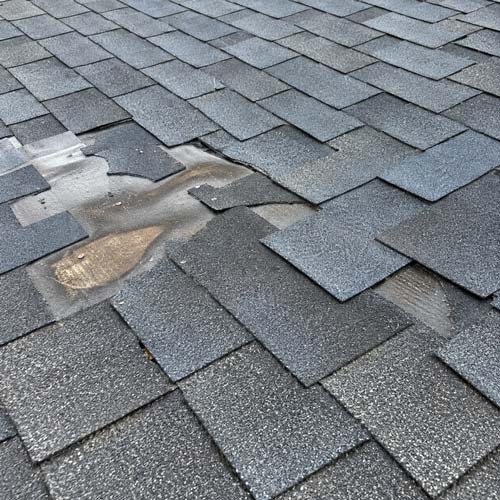
Flashing is one of the most common sources of roof leaks, and it covers several distinct details around a roof.
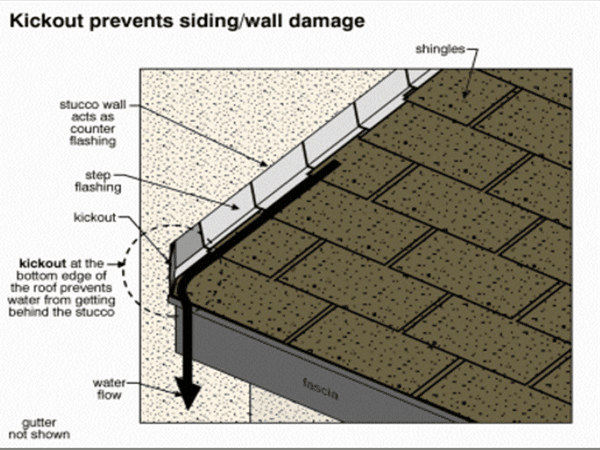
Kick-out (diverter) flashing directs rainwater away from the siding and into the gutter at points where a roof edge meets a sidewall. Missing or improperly installed kick-out flashing is a frequent and destructive source of water intrusion, and it often isn’t obvious until vertical water staining appears on the siding below it, by which point damage may have already occurred behind the wall covering.
Plumbing vent (stack) flashing seals around the pipes that vent the home’s plumbing system through the roof. Metal flashing collars can develop rust holes over time, and rubber boots (used with plastic vent pipes) can become brittle and crack with age and UV exposure. Either condition can allow water to enter around the pipe.
Step flashing and sidewall flashing protect the intersection where a roof surface meets a vertical wall. Correctly installed step flashing uses an individual L-shaped piece for every course of shingles, so that even if one piece fails, the water is caught by the piece below it. A single continuous piece of flashing in place of individual step flashing is a less reliable substitute, even though it can look similar from a distance.
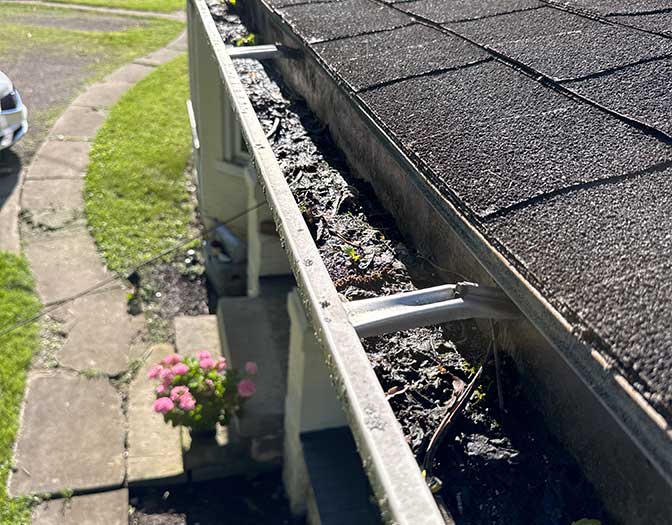
Several smaller components work together to keep water moving off the roof and away from the home rather than underneath the roofing material.
Ice and water shield, a self-adhered underlayment, is typically found at eaves, valleys, and around penetrations like chimneys and skylights, the areas most prone to water intrusion. Its absence in these vulnerable areas is a common finding, particularly on older roofs installed before this became standard practice in many areas.
Drip edge is a small metal trim piece installed along the roof edge that directs water into the gutters instead of behind them. Where drip edge is missing, water can drip behind the gutter system over time, which can lead to rotted roof sheathing and fascia, stained siding, and, in some cases, water finding its way toward the foundation.
On roofs with a low pitch, standard asphalt shingles may not be an appropriate covering at all. Shingles are designed to shed water using gravity, and on a roof pitch that’s too shallow, water can work its way up and under the shingles instead of running off, leading to accelerated rot and leaks regardless of how well the shingles themselves were installed.
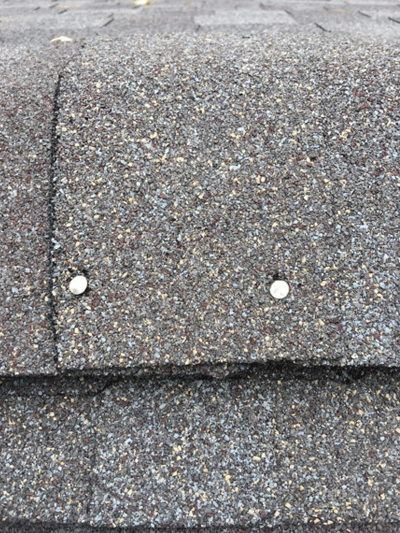
Even shingles that are the right product for the roof can fail early if they weren’t installed correctly.
A proper starter course along the eaves helps protect the first row of shingles above it; a starter course installed incorrectly, or skipped, can leave the roof’s most vulnerable edge under-protected. Nailing is another common source of installation issues: nails driven at an angle can tear the shingle’s fiberglass mat, nails driven too high can leave the shingle’s lower section unsecured, and over-driven nails (often from a poorly calibrated pressure tool) can also compromise the shingle. Any of these can lead to shingles loosening or failing well before the end of their expected service life.
Hips and ridges are also worth a closer look, since these areas see the highest wind exposure on the roof. Standard 3-tab or dimensional shingles used in place of purpose-made hip-and-ridge shingles offer less wind resistance in exactly the location that needs it most.
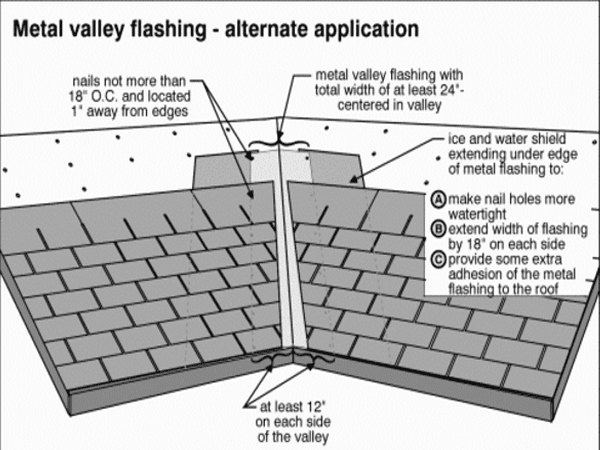
Roof valleys concentrate a large volume of water in a small area, which makes proper shingling technique especially important there. A valley that lacks the correct overlap and cutback can allow water to work its way beneath the shingles rather than draining through cleanly.
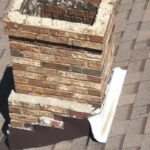
Chimneys present a similar concentration point. A cricket, a small gabled or ridged structure built behind the high side of a chimney, is meant to divert water around the chimney instead of letting it pool against the back side. On larger chimneys in particular, a missing cricket is a common and fairly easy detail to overlook during construction, and it can lead to water intrusion that isn’t always visible from the ground.
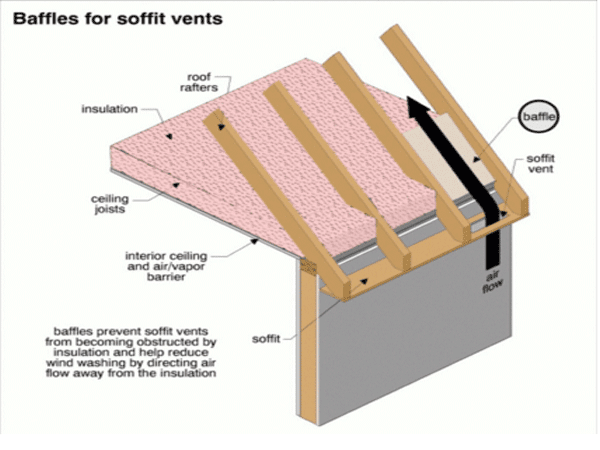
Attic ventilation affects the roof from underneath rather than from the weather side, but it plays a real role in roof performance. Poor ventilation can trap heat and moisture in the attic space, and over time that combination can contribute to premature aging of the roof decking and shingles from below, along with an increased risk of condensation and microbial growth in the attic itself.
[Note for James/Ella: the original source content included two statistics here, roughly 90% of homes having inadequately ventilated attics, and a claim that 58% of childhood asthma cases are tied to poor attic ventilation. Neither had a cited source, and the asthma figure is a strong medical causation claim that shouldn’t go on the site without a verifiable, reputable source (CDC, EPA, or a peer-reviewed study). Recommend either sourcing a citable, roof- or moisture-specific statistic, or leaving this section as a general explanation without a number, as written above.]
Signs of a ventilation problem can include visible moisture staining on the underside of the roof deck, matted or compressed insulation, or an attic that feels noticeably hotter than expected during a summer inspection.
Roof problems can develop for many different reasons. Common causes include:
For example, a missing cricket behind a chimney can allow water to pool and eventually work its way under nearby shingles, while poor attic ventilation can shorten the service life of an otherwise sound roof from underneath.
Understanding the cause is important because replacing shingles without correcting an underlying flashing or ventilation problem can allow the same defect to return.
Home buyers should pay attention to visible or noticeable signs that may indicate the roof requires additional attention.
Warning signs can include:
These signs do not necessarily identify the exact cause of a problem. Instead, they indicate that the condition should be investigated rather than ignored, which is exactly what a full home inspection is designed to do before you’re locked into a purchase.
A roof affects more than curb appeal.

The roof is the home’s primary defense against water intrusion. A compromised roof can allow moisture into the attic, walls, and eventually the home’s interior.

Prolonged leaks can contribute to rot, mold, and damage to framing and decking that go well beyond the cost of the roof covering itself.

A poorly maintained or significantly deteriorated roof may need more frequent repairs sooner than its expected service life would suggest.

Poor attic ventilation and an aging roof covering can both contribute to higher heating and cooling costs.

A significant roofing problem discovered after closing can become a costly surprise for a new homeowner. Identifying concerns before purchasing allows the buyer to get an informed opinion and budget accordingly.
This is exactly why the roof is evaluated as part of a full home inspection rather than in isolation. A roofing problem rarely tells the whole story about a house on its own. Schedule your home inspection with HC Inspectors to get a complete picture of the roof alongside every other major system before you close.
Further evaluation by a qualified roofing contractor may be appropriate when an inspection identifies a condition that cannot be fully diagnosed during a standard home inspection.
Examples may include:
A home inspector can identify and report observable concerns, but a licensed roofing contractor may be needed for a detailed diagnosis, repair estimate, or replacement recommendation.
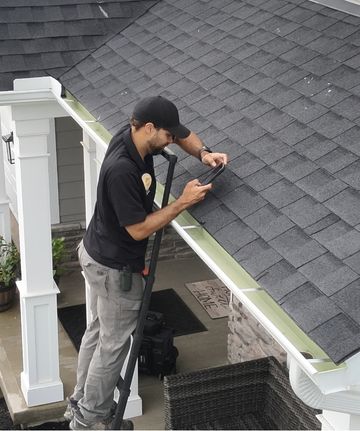
A home inspector evaluates accessible portions of the roof, including the shingle condition, flashing details, drainage components, attic ventilation, and any signs of past or active leaks, within the scope of the inspection.
The most common findings are shingle aging and wear, flashing deficiencies (particularly at chimneys, sidewalls, and plumbing vents), missing or inadequate drip edge, poor attic ventilation, and installation issues like improper nailing or a missing chimney cricket.
No. Age alone does not determine whether a roof needs to be replaced. The roof’s condition, maintenance history, installation quality, and any observed defects should all be considered together.
Flashing seals the points where a roof meets a wall, chimney, or vent pipe, the areas most prone to leaks. Missing, damaged, or improperly installed flashing is one of the most common causes of roof leaks.
An inspector can identify visible evidence of past or active leaks, such as staining, damaged decking, or interior water stains, where accessible. Confirming the exact source and extent of a leak may require further evaluation by a roofing contractor.
Whenever it’s safe and the roof’s height and pitch allow it, yes. HC Inspectors physically walks roofs under 18 feet high with a 10/12 pitch or less, which covers nearly all residential roofs. Steeper or higher roofs may be evaluated from the eaves, from an adjacent vantage point, or with a drone. Direct roof access provides a more reliable evaluation than viewing the roof only from the ground or a ladder.
Yes, often. Standard shingles are designed to shed water on a slope steep enough for gravity to move it along. On roofs with a low pitch, a different roofing material or installation approach may be more appropriate.
A separate evaluation by a licensed roofing contractor may be appropriate when the home inspection identifies significant concerns, active leaks, widespread shingle failure, or conditions requiring closer diagnosis than a visual inspection allows.
Homeowners should have their roof visually checked at least once or twice a year, and after any significant storm event.
No. The roof is evaluated as part of a broader home inspection covering observable conditions within the inspection scope. A detailed repair or replacement estimate should come from a licensed roofing contractor.
The roof is one of the most important systems protecting a Central Ohio home. Understanding how it’s inspected and recognizing common problems can help buyers make more informed decisions during the home-buying process.
A roof does not need to be perfect to be serviceable, and an older roof does not automatically mean replacement is necessary. What matters is understanding its current condition, identifying significant defects, and determining whether additional evaluation or repair is appropriate.
For Columbus and Central Ohio home buyers, a professional home inspection can provide valuable information about the condition of the roof, along with every other major system in the home, before a purchase is completed. When an inspection identifies a concern that requires specialized diagnosis, working with a qualified roofing contractor can help determine the appropriate next step.
Schedule your home inspection with HC Inspectors and get a complete evaluation of the roof and every other major system, including the furnace, electrical, plumbing, and structure, in one visit.