What a Columbus & Central Ohio home inspection reveals about exterior drainage, driveways, walkways, patios, porches, retaining walls, grading, and property conditions that may affect a home’s safety and long-term maintenance.
An exterior home inspection evaluates visible and accessible conditions around a property, including grading, drainage, walkways, driveways, patios, porches, and retaining walls where applicable. Inspectors look for settlement, cracking, deteriorated surfaces, unsafe walking conditions, and signs that water may be collecting near the foundation. These observations help home buyers understand potential safety concerns, maintenance needs, and conditions that may require further evaluation before purchasing a home.
An exterior home inspection evaluates visible and accessible features surrounding a residential building to identify deterioration, drainage problems, safety concerns, and conditions that may affect the structure. Although buyers often focus on the condition of interior rooms, the surrounding ground and exterior improvements can reveal important information about how a property manages water and responds to seasonal changes.
Driveways, walkways, patios, porches, and retaining walls are exposed to changing weather conditions throughout the year. Over time, moisture, soil movement, temperature fluctuations, and normal wear can cause cracking, settlement, surface deterioration, and drainage problems.
The way water moves around a home is especially important. Rainwater that repeatedly collects near the foundation can contribute to basement or crawl space moisture problems. Poorly positioned downspouts, low areas beside the house, and improperly sloped hard surfaces may allow water to remain where it should be directed away.
For buyers in Columbus and Central Ohio, exterior conditions deserve particular attention because seasonal freezing and thawing, heavy rainfall, varying soil conditions, and previous property alterations can influence the performance of concrete, pavement, foundations, and drainage systems.
Not every crack or uneven surface indicates a serious defect. However, understanding the pattern and extent of visible deterioration helps buyers recognize which conditions may require ordinary maintenance and which may justify further evaluation before closing.
During a home inspection, the inspector observes accessible exterior improvements and visible site conditions for deterioration, drainage concerns, and potential safety hazards.
Depending on the property, accessibility, and applicable inspection scope, observations may include:
HC Inspectors considers these findings in relation to the home’s foundation, basement, crawl space, roof drainage, and other accessible building components.
A standard home inspection is primarily visual. Inspectors do not normally perform soil testing, engineering calculations, underground pipe inspections, or invasive investigations of concealed drainage systems.
Specialized systems such as private wells, septic systems, underground sewer lines, and buried storm drains may require separate evaluations. Their presence on a property does not mean that every component is included in a standard home inspection.
When a visible condition suggests significant settlement, drainage failure, or a safety concern, the inspection report may recommend additional evaluation by a qualified professional.
Exterior defects can range from relatively minor surface deterioration to conditions involving significant settlement, water intrusion, or unstable structures. The importance of a finding depends on its location, severity, and relationship to other visible conditions.
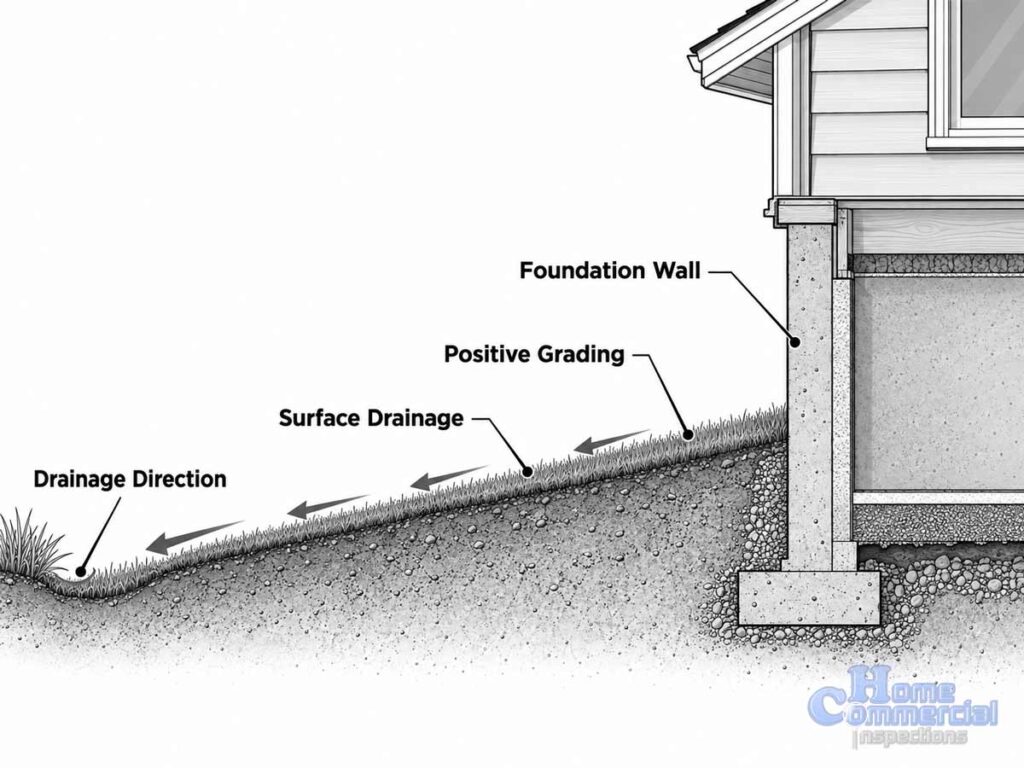
The ground surrounding a home plays an important role in managing rainwater. Ideally, surface grading directs water away from the foundation rather than allowing it to collect against the building.
Negative grading occurs when the ground slopes toward the house. This condition may cause water to accumulate beside foundation walls, particularly during heavy rainfall or when the surrounding soil becomes saturated. Over time, repeated moisture exposure can contribute to damp basements, crawl space moisture, and deterioration of vulnerable building materials.
Inspectors observe accessible grading conditions and look for low areas, erosion, soil settlement, and visible indications that water is collecting near the house. Downspouts discharging directly beside the foundation, poorly graded landscaping beds, and paved surfaces that slope inward may increase concern. Correcting grading or drainage problems should account for siding clearance, existing drains, and nearby structures rather than simply adding soil against the house.
Driveways commonly develop cracks and surface wear as concrete and asphalt age. Weather exposure, vehicle loads, soil movement, and moisture entering existing cracks can gradually affect pavement condition.
In Central Ohio, freeze-thaw cycles can contribute to deterioration when water enters cracks and expands during freezing temperatures. Uneven slabs, potholes, and localized settlement may develop where supporting soil has shifted or pavement materials have weakened.
Inspectors look for significant cracking, displaced pavement, deteriorated surfaces, and drainage conditions that may affect safety or maintenance. Small cracks are often manageable, but substantial settlement, widespread surface failure, or water flowing toward the garage or foundation may require closer attention.
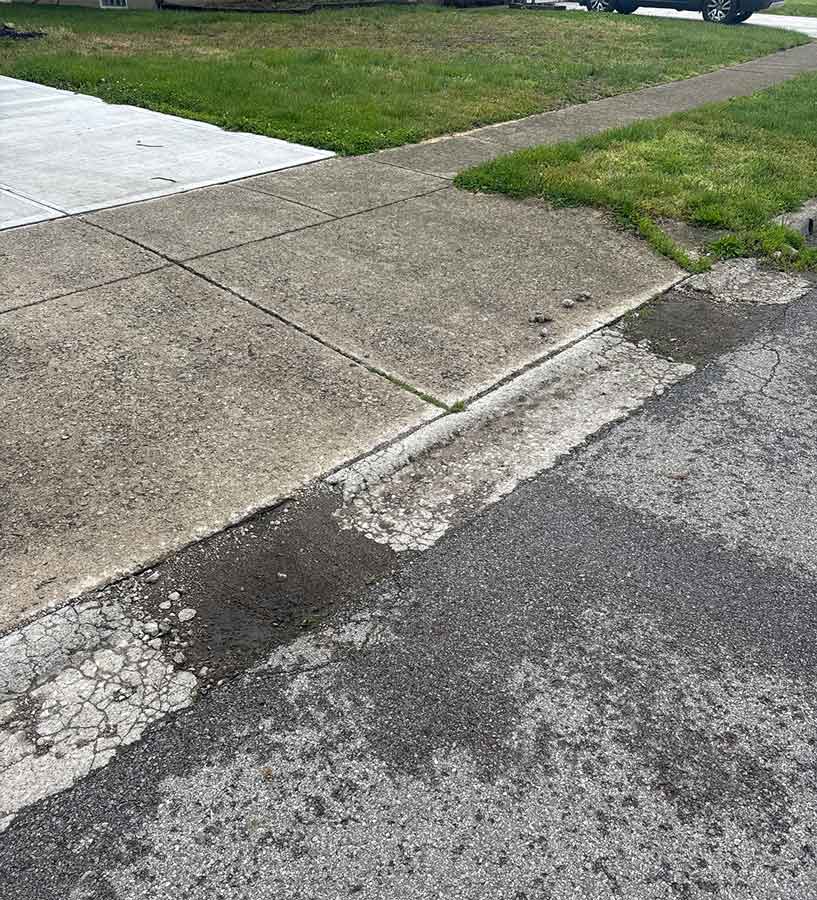
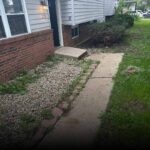
Walkways and sidewalks provide access to the home and should offer reasonably stable, usable walking surfaces. Over time, individual concrete slabs or paving materials may settle, heave, crack, or become displaced.
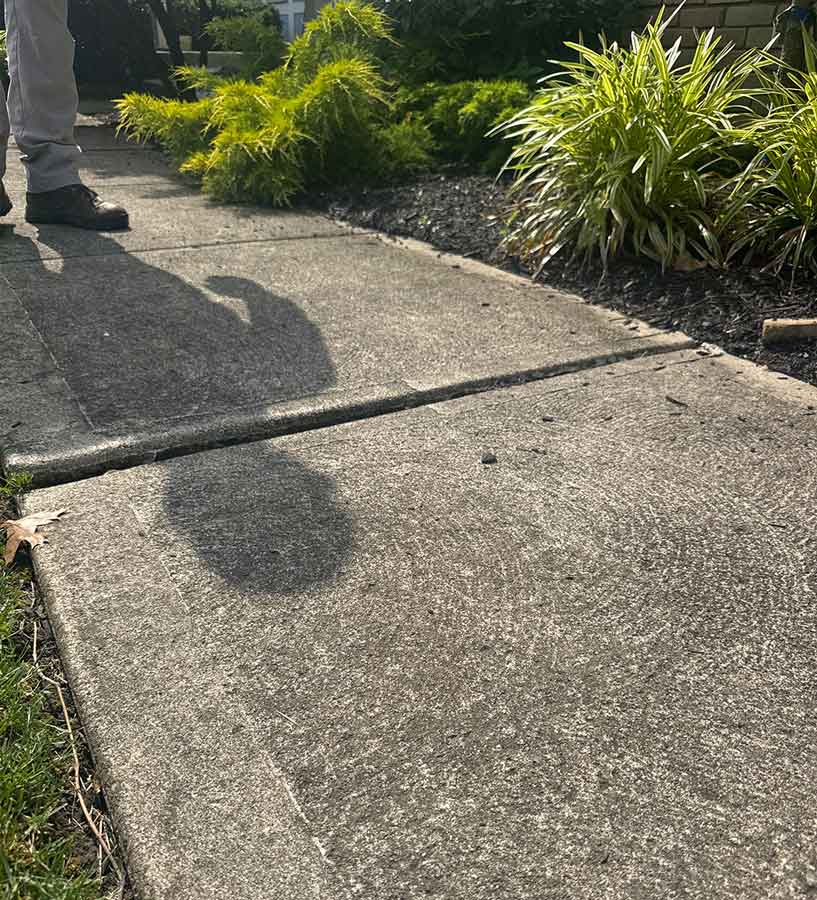
Uneven joints and raised edges can create trip hazards, particularly near entryways, stairs, and areas used frequently by residents or visitors. Tree roots, soil movement, inadequate support, and freeze-thaw conditions may contribute to these changes.
Inspectors observe noticeable surface irregularities, broken materials, and conditions that could affect pedestrian safety. The significance of a potential trip hazard depends on its configuration and applicable requirements; not every small difference in elevation is automatically a code violation. Significant displacement or deteriorated walking surfaces may warrant repair by a qualified contractor.
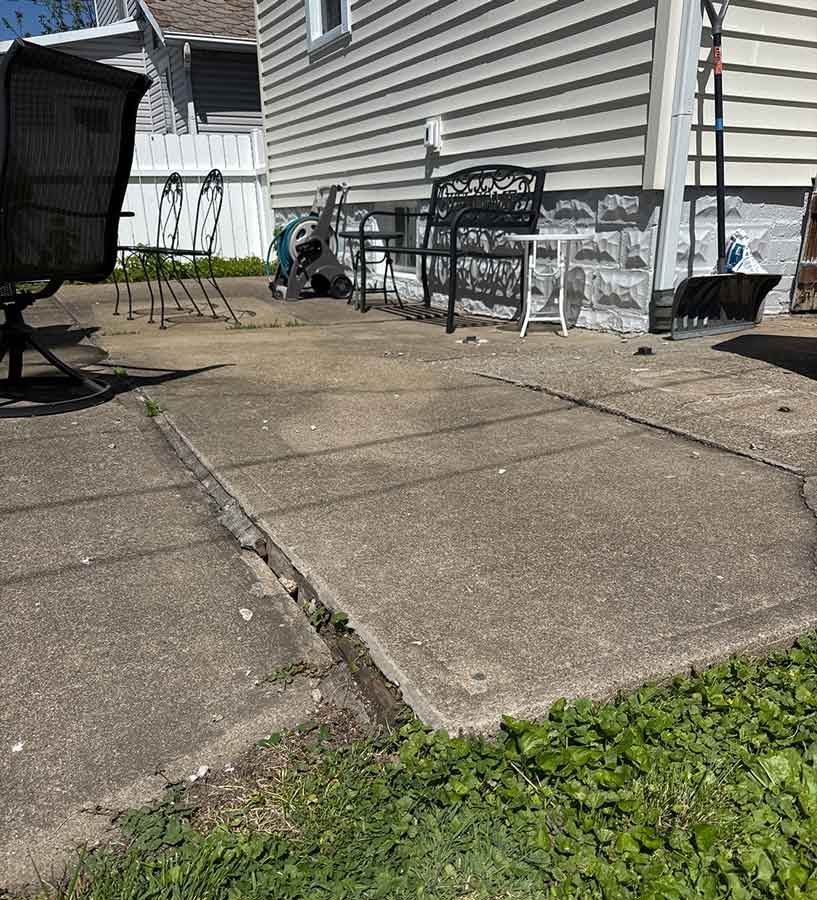
Patios provide outdoor living space, but their performance depends partly on surface condition and drainage. Concrete and paved patios can develop cracks, settled sections, standing water, or deteriorated joints as they age.
A patio that slopes toward the home may direct water against the foundation or exterior wall. Water can also collect where slabs have settled, drainage openings are obstructed, or roof runoff repeatedly discharges onto the patio surface.
During an inspection, visible cracks, displaced slabs, surface damage, and drainage patterns may indicate maintenance concerns. Inspectors also consider the relationship between the patio and adjacent walls, doors, and foundation areas. When significant settlement or recurring water accumulation is present, further evaluation may be appropriate to determine whether drainage improvements or repairs are needed.
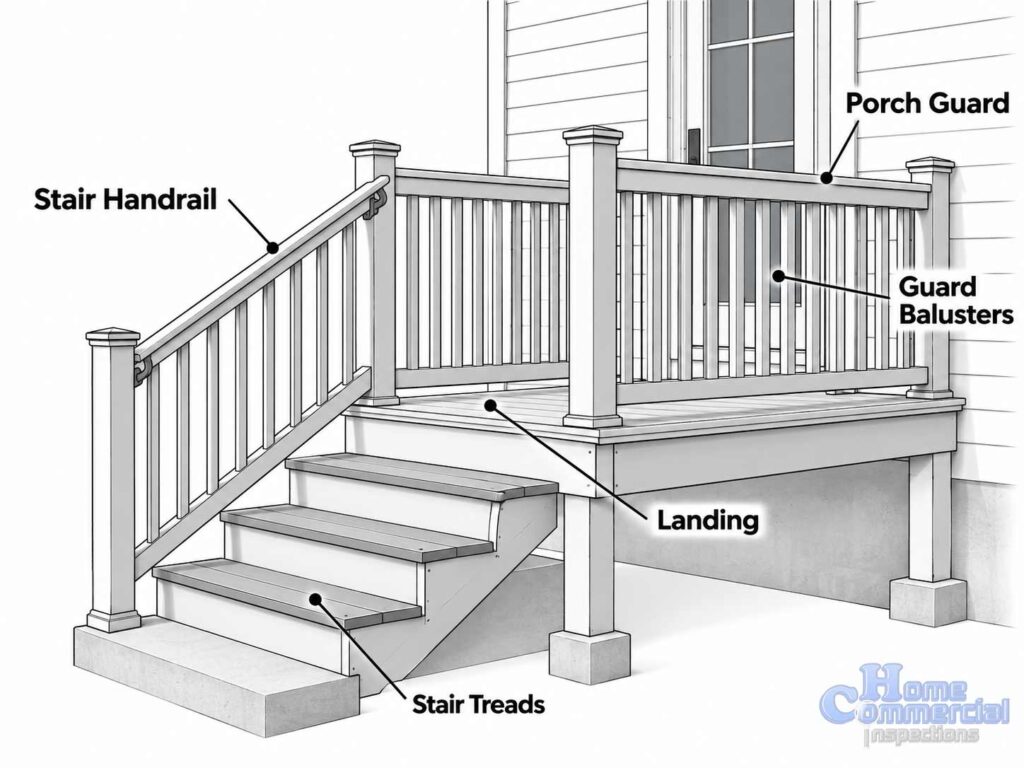
Porches and exterior stairs must provide stable access to the home. Depending on their construction, these features may be affected by settlement, deteriorated concrete, wood decay, corrosion, or movement at their connections.
Common visible problems include cracked porch slabs, steps separating from the landing, uneven stair surfaces, loose railings, and deteriorated supporting materials. A gap between a porch and the house can result from movement of the exterior structure and does not automatically establish that the home’s main foundation is failing.
Inspectors observe accessible porch and stair conditions, including visible movement, deterioration, and safety-related concerns. Significant settlement, unstable steps, inadequate guards, or damaged supporting components may require evaluation by a qualified contractor. Repair decisions depend on the underlying condition rather than the visible surface alone.
Buildings may experience some movement as supporting soils respond to loads, moisture conditions, and changes over time. Settlement becomes more concerning when movement is uneven, substantial, or associated with visible damage.
Exterior symptoms may include stair-step cracks in masonry, cracks in foundation walls, separation near openings, or noticeable displacement of building components. Related interior conditions, such as sloping floors or sticking doors, may provide additional information about possible movement.
Inspectors consider the location, pattern, and extent of visible cracking alongside other accessible observations. However, a visual home inspection cannot reliably establish the rate of movement, soil capacity, or structural significance of every crack. Where substantial or potentially progressive movement is suspected, evaluation by a qualified structural engineer or foundation specialist may be appropriate.

Retaining walls support changes in ground elevation and may help create level areas for landscaping, driveways, or outdoor spaces. Their performance depends on construction, supporting soils, drainage, and the loads acting behind the wall.
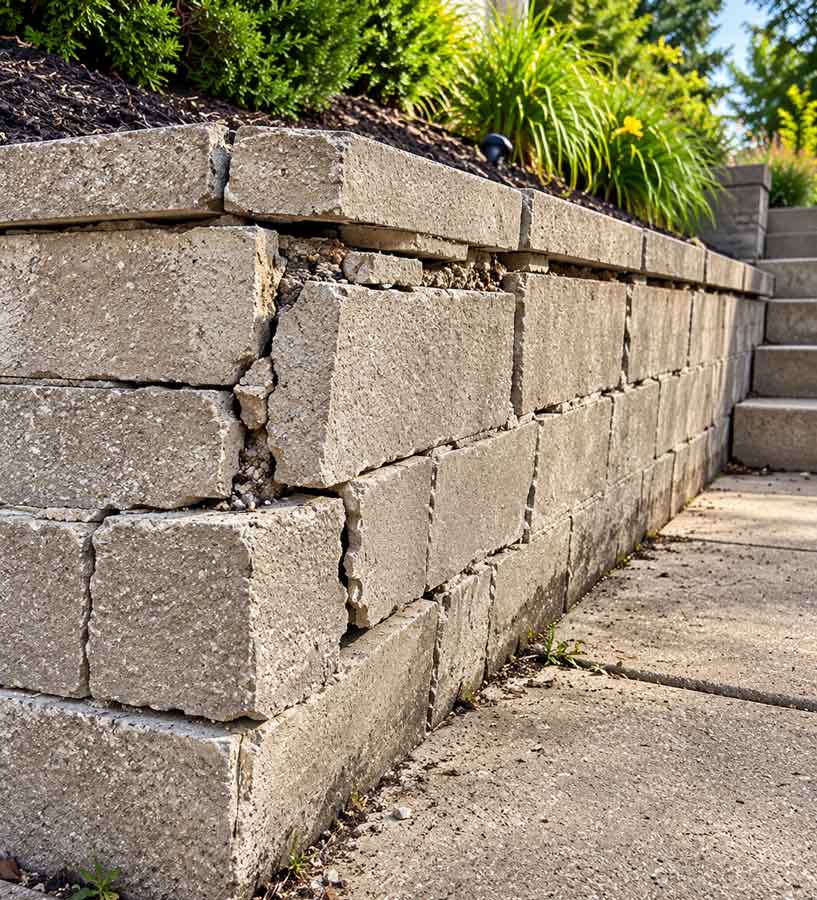
Visible problems may include leaning, bulging, cracked masonry, displaced blocks, erosion, and separation between wall sections. Water accumulating behind a retaining wall can increase pressure on the structure, especially when drainage provisions are inadequate or obstructed.
Inspectors may note visible retaining wall deterioration or movement when these features are within the inspection scope. They generally cannot determine the adequacy of concealed footings, reinforcement, or buried drainage systems through visual observation. Significant movement, displacement, or instability should be evaluated by an appropriately qualified professional.
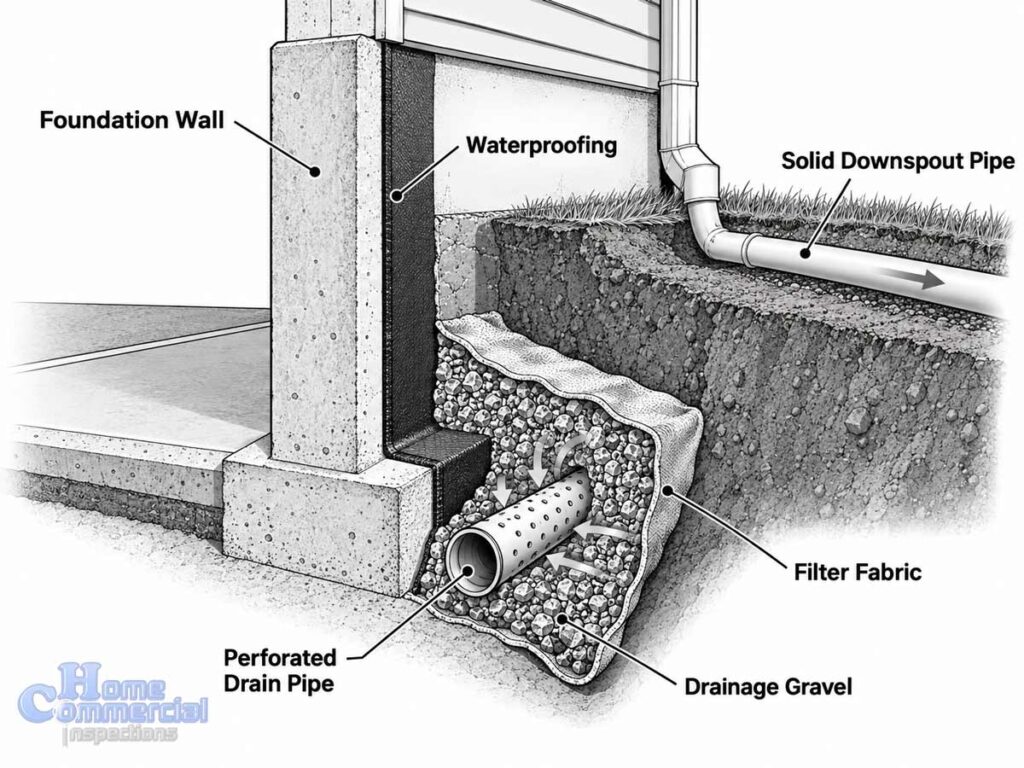
Managing roof runoff is an important part of protecting the areas around a home. Gutters and downspouts collect water from the roof and direct it toward discharge points, but damaged components or poor discharge locations can create problems near the foundation.
Clogged gutters, disconnected downspouts, improper extensions, and drainage outlets that discharge too close to the building may contribute to erosion, standing water, or excessive moisture near foundation walls. Buried downspout connections and other underground drainage components may also become obstructed or damaged without obvious surface evidence.
Inspectors look for visible defects and accessible drainage concerns, including signs of overflow, erosion, and water accumulation. A standard inspection generally cannot confirm the internal condition of buried drainage pipes or predict their performance during every rainfall event. Recurring flooding or suspected underground blockages may require further investigation by a drainage professional.
Exterior deterioration results from several interacting factors, including weather, drainage, ground movement, and normal aging. Some conditions develop gradually, while others appear after significant rainfall, construction work, or changes to the surrounding property.
Common causes include:
For example, a driveway crack may begin as a minor surface defect but become more pronounced after repeated freeze-thaw cycles. Similarly, a patio that settles toward the house may create a drainage condition that contributes to moisture problems in a nearby basement.
Understanding these relationships helps home buyers see why an exterior defect may involve more than the surface where it appears.
When touring a property, buyers should pay attention to exterior conditions that may indicate drainage problems, settlement, deterioration, or potential safety hazards.
Warning signs include:
These observations do not automatically mean the property has a major structural defect. However, several related symptoms may suggest a condition that needs closer investigation.
For example, foundation-area ponding combined with basement moisture staining may be more concerning than an isolated low spot elsewhere in the yard.
Exterior conditions can influence safety, maintenance costs, drainage performance, and the long-term condition of a property. Problems that begin outside may also affect the home’s foundation and interior spaces.

Poor drainage, soil movement, and significant settlement can contribute to changes in exterior slabs, porches, retaining walls, and building components. Some conditions may require structural evaluation to determine their significance.

Water collecting near the home can increase exposure to moisture at foundation walls, basement openings, and other vulnerable areas. Improving drainage may be an important part of addressing recurring water intrusion.

Uneven walkways, deteriorated stairs, and unstable railings can create hazards for residents and visitors. Identifying these conditions before purchasing helps buyers plan necessary repairs.

Driveway replacement, concrete repair, drainage improvements, and retaining wall stabilization can involve significant expenses. Understanding visible deterioration helps buyers anticipate possible maintenance needs.

Exterior problems can affect everyday use of driveways, patios, entrances, and landscaped areas. Standing water or unstable surfaces may limit how comfortably and safely outdoor spaces can be used.
A comprehensive home inspection considers accessible exterior observations alongside the home’s other major components. This helps buyers understand how surface conditions may relate to concerns affecting the building itself.
Schedule your home inspection with HC Inspectors to evaluate accessible exterior components and the home’s other major systems before closing.
Further evaluation may be appropriate when an inspection identifies significant movement, unsafe conditions, drainage problems, or visible deterioration that cannot be fully assessed through a standard visual inspection.
Examples include:
Depending on the condition, evaluation may involve a structural engineer, drainage contractor, concrete specialist, qualified foundation contractor, licensed plumber, well professional, or septic system specialist.
Specialized evaluations may involve testing, measurements, excavation, camera inspections, or other procedures that exceed the scope of a standard home inspection.
A home inspector evaluates accessible exterior features and visible site conditions, including grading, drainage, driveways, walkways, patios, steps, and other applicable components. Inspectors look for deterioration, safety concerns, and signs of movement or water-related problems.
Not always. Small cracks are common in aging concrete and asphalt. Larger fractures, uneven pavement, significant settlement, or conditions that direct water toward the home may warrant further evaluation or repair.
Negative grading occurs when the ground slopes toward the building rather than away from it. This can allow rainwater to collect near foundation walls and may contribute to basement or crawl space moisture problems.
An inspector can identify visible conditions that may suggest settlement, such as significant cracks, uneven surfaces, and displaced building components. Determining the cause, extent, or structural significance of movement may require a structural engineer or foundation specialist.
Accessible patios and sidewalks may be evaluated for visible deterioration, noticeable movement, drainage concerns, and potential safety hazards, depending on the applicable inspection scope.
Standing water near a foundation can increase moisture exposure and may contribute to water intrusion or soil-related problems. The significance depends on the location, frequency, drainage conditions, and surrounding construction.
Visible retaining wall conditions may be noted when within the inspection scope, especially where movement or deterioration presents a concern. A standard visual inspection does not establish the structural adequacy of concealed retaining wall components.
Specialized septic and well evaluations are generally outside the scope of a standard home inspection unless separately arranged. Buyers should verify the inspection services included and consider dedicated evaluations when these systems are present.
A standard visual home inspection cannot reliably determine the condition of concealed underground piping. Suspected blockages, leaks, or pipe damage may require specialized testing or a sewer camera inspection.
Further evaluation may be appropriate when visible findings include substantial settlement, significant cracking, persistent foundation-area ponding, unstable retaining walls, or repeated signs of water intrusion.
A home’s exterior provides important information about how the property manages water, responds to changing weather, and performs over time. Driveways, walkways, patios, porches, retaining walls, and grading conditions can reveal maintenance needs, safety concerns, and potential issues affecting the building.
Not every crack or uneven surface requires a major repair. The important consideration is whether a condition is isolated, whether related symptoms are present, and whether additional evaluation may be necessary.
For Columbus and Central Ohio home buyers, a professional home inspection provides an opportunity to identify accessible exterior concerns alongside the condition of the foundation, roof, interior, plumbing, and other major systems.
Understanding these observations before closing helps buyers make informed decisions and plan for appropriate maintenance or repairs.
Schedule your home inspection with HC Inspectors and get a professional evaluation of accessible exterior components alongside the roof, foundation, electrical, plumbing, heating, cooling, and other major home systems in one visit.