How HVAC Expertise Helps Find Mold Problems Others Miss!
When most people think about mold inspections, they picture someone looking for visible growth on walls or in basements during a home inspection. But here’s what becomes clear after years of working in heating, cooling, and ventilation: the real story behind mold problems is usually hidden in a building’s mechanical systems.
As a certified Columbus, Ohio, mold assessor and HVAC technician with experience dating back to the early 2000s, having this dual perspective brings unique insights to indoor air quality issues. The focus isn’t just on where mold is growing—it’s about understanding why it’s growing there in the first place.
It’s Not Always About Leaks
Sure, water leaks cause mold. Everyone knows that. A leaking roof, a burst pipe, or water seeping through windows and doors will create problems fast. But what many people don’t realize is that serious mold issues can develop without a single visible leak in an apartment block or commercial building.
Commercial property owners often insist there’s no water damage, yet mold keeps growing. The culprit? Their heating and cooling system.
An improperly balanced HVAC system can create humidity problems that are just as damaging as a leaky pipe. When a system doesn’t exchange enough fresh air, when it’s sized wrong for the space, or when the ductwork is poorly designed, the stage is set for mold growth. High humidity is high humidity—mold doesn’t care whether it comes from a leak or from an air conditioning system that can’t keep up.
ASHRAE Standard 62.1 covers commercial buildings and specifies exactly how much fresh air needs to circulate based on occupancy and building use. Standard 62.2 does the same for homes. These standards specify ventilation rates, acceptable humidity ranges, and air quality benchmarks that protect occupant health.
During a mold assessment, the work goes beyond just collecting air samples. The evaluation includes whether the building meets these standards. Is enough fresh air coming in? Is humidity being controlled properly? Are temperature and airflow balanced throughout the space? Most mold inspectors don’t ask these questions because they lack the HVAC background to understand what they’re looking at. This technical knowledge makes all the difference.
The Real Problem with Unbalanced Systems
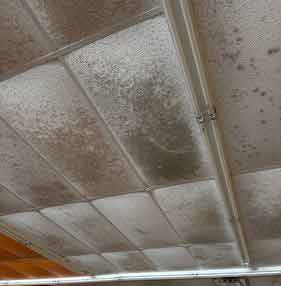
Consider a common scenario: a commercial building or multi-family property has an HVAC system that’s too large for the space. The system cools the air quickly and shuts off before it has time to remove moisture. The temperature feels fine, but humidity stays high. Over time, that moisture accumulates in hidden spaces—inside walls, in ceiling cavities, behind furniture. That’s when mold starts growing.
Or think about an apartment building with negative air pressure because the exhaust fans are stronger than the supply air. That building is literally sucking humid outdoor air through every crack and gap in the envelope. Even without any leaks, moisture is being pulled into the structure constantly.
These are HVAC problems that create mold problems. Removing the mold without fixing the mechanical system means it’s coming right back.
How HVAC Systems Spread Mold
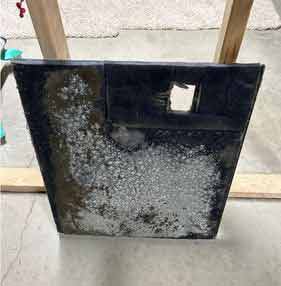
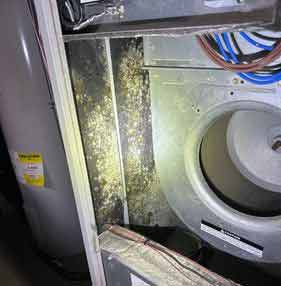
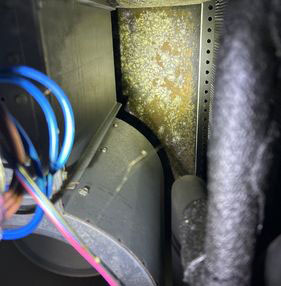
Here’s a concerning reality: heating and cooling systems can turn a small, localized mold problem into a building-wide disaster.
Once mold spores get into the ductwork—and they will if there’s mold anywhere the system draws air—those spores get distributed everywhere. Every room, every floor, every space that duct touches. The HVAC system becomes a transportation network for contamination.
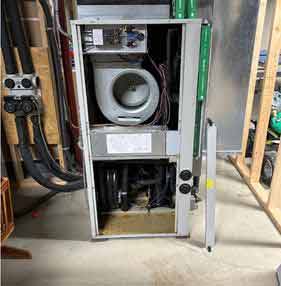
That’s why ductwork inspection is essential during mold assessments. Understanding whether the system is spreading the problem and whether the ducts themselves have become contaminated is critical information.
Humidity Is Everything
ASHRAE recommends keeping indoor humidity between 30% and 60%. Below 30%, things get uncomfortably dry. Above 60%, mold growth becomes likely. Seems simple enough, right?
Except maintaining that range requires proper equipment, correct sizing, adequate dehumidification, and balanced airflow. It’s not automatic. It’s not guaranteed just because an HVAC system exists.
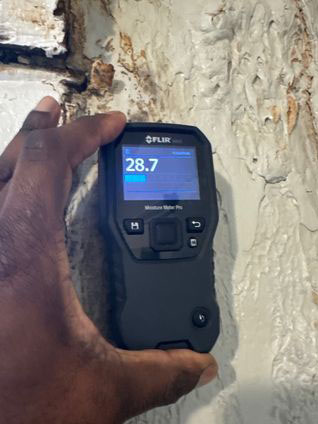
Humidity measurements throughout multi-family buildings and commercial properties during assessments reveal important patterns. Are certain areas consistently humid? Is humidity spiking during particular times of day? Are there dead zones where air doesn’t circulate?
These measurements show whether mechanical systems are doing their job. Often, they’re not.
What Makes These Assessments Different?
When inspecting a commercial property, apartments or multi-family building for mold, the process includes everything a traditional mold inspector does—air sampling, surface testing, visual inspection, laboratory analysis. But the evaluation also covers the entire HVAC system as part of the assessment.
Ventilation rates are checked against ASHRAE standards. Temperature and humidity are measured in multiple locations. Ductwork is inspected for contamination and design flaws. System balance and pressure relationships are evaluated.
The reports don’t just identify where mold is growing. They explain the mechanical reasons why it’s growing and what needs to change to prevent it from coming back. That’s the difference between treating symptoms and solving problems.
The Bottom Line
When inspecting the interior of a home, a commercial property, apartments or multi-family building for mold, the process includes everything a traditional mold inspector does—air sampling, surface testing, visual inspection, laboratory analysis. But the evaluation also covers the entire HVAC system as part of the assessment.
Ventilation rates are checked against ASHRAE standards. Temperature and humidity are measured in multiple locations. Ductwork is inspected for contamination and design flaws. System balance and pressure relationships are evaluated.
The reports don’t just identify where mold is growing. They explain the mechanical reasons why it’s growing and what needs to change to prevent it from coming back. That’s the difference between treating symptoms and solving problems.
Let’s talk about your indoor air quality.
Call Home & Commercial Inspections at 1 (800) 241-0133. The combination of HVAC expertise and mold assessment training provides answers that make sense—and solutions that last.