
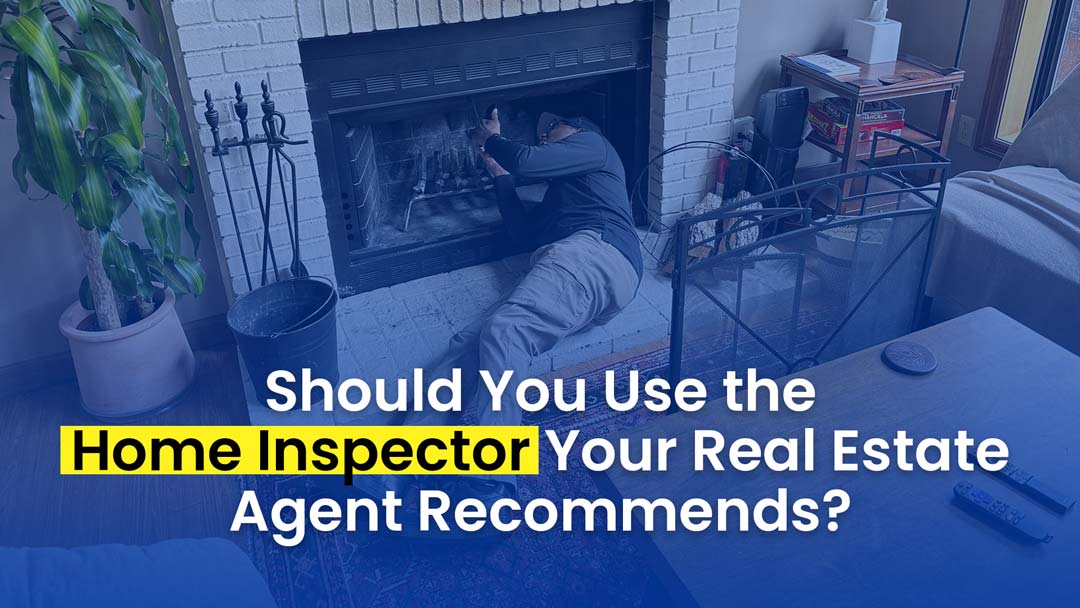
If your real estate agent recommends a home inspector, should you hire them? The answer is: possibly—but you should always do your own research first.
There is nothing inherently wrong with a real estate agent recommending a home inspector. Many experienced agents have worked with inspectors for years and recommend professionals because they have seen the quality of their work firsthand.
However, homebuyers should understand the potential conflict of interest that can exist when someone who earns a commission from the successful closing of a real estate transaction recommends the person responsible for independently inspecting the property.
Your real estate agent represents you during the transaction. Your home inspector, on the other hand, should independently evaluate the property for you—not protect the transaction. That distinction is extremely important.
You can use a home inspector recommended by your Realtor or real estate agent, but you should independently verify the inspector’s qualifications, experience, reviews, licensing, certifications, and inspection process before hiring them. A good real estate agent may provide several home inspector recommendations and encourage you to make your own decision.
The concern begins when a buyer is strongly directed toward one particular inspector or discouraged from hiring another inspector because that person is considered “too thorough,” “too picky,” or likely to “scare the buyer.”
A home inspection isn’t supposed to make a property look good or bad. It’s supposed to accurately describe the observable condition of the property.
Most buyers don’t already know a home inspector. After an offer is accepted, the buyer may have only a limited inspection period — they suddenly need to find an inspector, schedule the inspection, review the findings, and decide how they want to proceed.
Naturally, many buyers ask their real estate agent, “Who should I use for my home inspection?” Experienced real estate agents may know several excellent inspectors, and that can be extremely helpful.
However, buyers should remember that the professionals involved in a real estate transaction don’t necessarily have the same financial interests. Real estate agents are generally compensated when a transaction closes. A home inspector, by contrast, is paid to inspect the property and report their findings regardless of whether the buyer ultimately purchases the home. That independence is an important part of the inspection process.
A professional home inspector should not allow a real estate agent, seller, buyer, lender, or anyone else involved in the transaction to influence their findings. (See ASHI’s Code of Ethics) However, pressure isn’t always obvious. An inspector may hear comments such as:
The inspector’s responsibility shouldn’t change because someone is worried about the transaction. If the inspector observes a significant concern, the buyer deserves to know about it.
A failing roof doesn’t become less important because closing is next Friday. A potentially unsafe electrical condition doesn’t become less significant because negotiations have already been difficult. Water intrusion doesn’t disappear because everyone wants the transaction completed. The property determines the inspection findings—not the transaction.
The home inspector’s responsibility is to independently evaluate the home’s readily accessible systems and components within the scope of the inspection and communicate the findings to the client. That can include conditions involving roofing, exterior components, structure and foundation, electrical systems, plumbing, heating and cooling equipment, insulation and ventilation, interiors, appliances, moisture intrusion, and other visible and accessible components included within the inspection.
Depending on the inspection company and property, buyers may also choose additional services such as sewer scope inspections, radon testing, mold assessments, termite or wood-destroying insect inspections, thermal imaging, or other environmental testing.
Some findings will be minor, and others can potentially involve thousands of dollars in repairs. The inspector shouldn’t exaggerate those conditions, but they shouldn’t minimize them either. A home inspection should never be favorable or unfavorable — it should be accurate.
It’s important to make something very clear: not all real estate agents pressure home inspectors. There are outstanding real estate professionals who genuinely advocate for their clients and want experienced, independent inspectors involved in their transactions, and home inspectors often develop excellent professional relationships with these agents.
Good agents understand that discovering problems is part of buying real estate. They don’t blame an inspector for finding a deteriorated roof, electrical concern, foundation issue, plumbing leak, or failing HVAC system. Instead, they help their client understand their options after receiving that information.
A good agent doesn’t need a home inspector who makes houses look good. They want an inspector who gives their client accurate information.
During the highly competitive housing market surrounding the COVID-19 pandemic, buyers in many markets faced bidding wars, limited inventory, rapidly rising prices, and multiple competing offers. Some buyers began waiving home inspections or limiting inspection contingencies to make their offers more attractive. (an estimated 19% to 30% of buyers during 2020–2021, according to NAR-sourced data)
But eliminating the inspection doesn’t eliminate problems with the property. Roofs still deteriorate. Foundations still move. Furnaces and air-conditioning systems still reach the end of their service lives. Electrical defects still create potential safety concerns. Water intrusion can still damage structures. Sewer lines can still fail. And environmental concerns can still exist.
A house can look beautiful during a showing while containing thousands—or potentially tens of thousands—of dollars in deferred maintenance and repairs. One of the most important lessons buyers can take from that period is simple: due diligence matters when purchasing real estate.
When real estate markets become more favorable to buyers, inspection contingencies and negotiations can become even more important. Buyers may have greater opportunities to investigate properties and make informed decisions before closing.
However, everyone involved still wants the transaction completed. The seller wants to sell. The listing agent wants the property closed. The buyer’s agent wants to complete the transaction for their client. The lender and title company have timelines.
The home inspector occupies a different position. The inspector should have no interest in whether you buy the house — their job is to tell you what they observed. That independence is valuable.
Whichever inspector you choose, make sure they’re independent, thorough, and working only for you. And get a completely independent evaluation of the property — no pressure, no conflicts of interest, just an accurate picture of the home you’re buying.
A Realtor recommending an inspector isn’t automatically a red flag. Instead, buyers should pay attention to how the recommendation is presented.
Be cautious if you’re strongly pushed toward only one inspector or discouraged from researching alternatives. Pay attention if another inspector is criticized for being “too thorough,” “too picky,” or someone who “kills deals.” You should also think carefully about recommendations based primarily on price or because an inspector is considered “easy to work with.” Ask yourself: easy for whom?
Your priority should be finding an inspector who will thoroughly evaluate the property and clearly communicate significant findings to you.
Before hiring a home inspector, independently research their qualifications. Consider their experience and licensing requirements in your state; professional certifications and continuing education; sample inspection reports; online reviews; inspection scope and methodology; construction or building-systems knowledge; specialized training; and additional inspection services.
Ask how long the inspection typically takes and whether you’ll have an opportunity to discuss significant findings directly with the inspector. Most importantly, ask whether the inspector works exclusively for you during the inspection. The answer should be simple: yes. (See ASHI’s directory of Certified Inspectors.)
Yes. A homebuyer can research and select their own home inspector rather than automatically choosing someone recommended during the transaction. Your agent’s recommendation can still be valuable.
Take the inspector’s name. Research them. Compare their experience with other inspectors. Look at their reviews and qualifications. Review a sample inspection report if one is available. Then make your own decision.
A professional real estate agent should respect—and even encourage—that level of due diligence.
In Ohio, home inspectors must be licensed through the state’s Division of Real Estate and Professional Licensing, so confirming a license is one of the simplest ways to independently verify anyone you’re considering. Ohio buyers can cross-check licensing and find other inspectors through the Ohio Home Inspector Network website.
Yes. Many experienced agents work with inspectors regularly and can offer helpful recommendations. It only becomes a concern if a buyer is pressured toward one specific inspector or discouraged from researching alternatives.
No. A homebuyer can always research and choose their own home inspector, regardless of who is recommended during the transaction.
No. A professional home inspector should never allow a real estate agent, buyer, seller, or lender to influence their findings. The inspector’s job is to report the property’s condition accurately. (See ASHI’s guidance on inspectors working under a real estate agency.)
Your real estate agent represents you during the transaction. Your home inspector independently evaluates the property for you and should have no interest in whether you buy the home.
Red flags include being pushed toward only one inspector, hearing another inspector criticized as “too thorough” or a “deal killer,” or being steered toward an inspector mainly because they’re inexpensive or “easy to work with.”
If you have any doubts, it’s reasonable to research additional inspectors, compare qualifications and reviews, and even request sample reports before making a final decision.
Look at their licensing, professional certifications, experience, sample reports, online reviews, and inspection methodology, and confirm they will walk you through significant findings directly.
Waiving an inspection doesn’t eliminate problems with a property — it only removes your opportunity to learn about them before closing.
Not automatically. A conflict becomes a concern only if the inspector’s independence is compromised by pressure to protect the transaction rather than accurately report the property’s condition.
An independent inspector works only for you, discusses findings directly with you, and reports conditions accurately regardless of how it affects the transaction timeline or negotiations.
Buying a home involves a team of professionals, and a knowledgeable real estate agent can be an extremely valuable part of that team. So can an experienced home inspector.
The issue isn’t whether your Realtor recommended the inspector. The issue is whether you’ve independently determined that the inspector is qualified, experienced, thorough, and willing to report the property’s condition without pressure from anyone involved in the transaction.
Your home inspector isn’t there to convince you to buy the house, and they’re not there to convince you not to buy it. They’re there to give you the information necessary to make that decision for yourself.
A home inspection should never be about protecting a commission, protecting a transaction, or making a property appear better than it is. It should be about giving the buyer an independent and accurate understanding of the home they are considering purchasing.
Schedule your home inspection with HC Inspectors and get an independent, accurate evaluation of the property before you close — no pressure from anyone involved in the transaction, just the facts you need to make your decision. From the roof down to the foundation, HC Inspectors evaluates the home’s major systems — structural, electrical, plumbing, heating and cooling, and more — and reports exactly what’s found, without softening the findings to keep a deal moving.
Home buyers who want to learn more about what a full inspection covers can also explore HC Inspectors’ other educational resources, since choosing the right inspector is only the first step in understanding the true condition of a home before you buy. Whether you found HC Inspectors through a Realtor’s recommendation, a friend’s referral, or your own research, the goal stays the same: an inspector who works for you, not for the transaction.

Licensed Certified Master Inspector
James Jones has nearly 30 years of experience performing home and commercial property inspections. He specializes in environmental testing, thermal imaging, drone inspections, and building performance assessments. As a member of the Board of Directors for the American Society of Home Inspectors (ASHI), he is committed to helping homebuyers, homeowners, businesses, and investors make informed property decisions through thorough inspections and clear, actionable reporting.