The home inspection industry has changed dramatically over the last decade. Technology has improved, tools have improved, and client expectations have improved. Yet surprisingly, some home inspectors still perform roof inspections from the ground with binoculars or only evaluate areas reachable from a ladder.
At Home & Commercial Inspections, LLC, we believe buyers deserve more than the bare minimum.
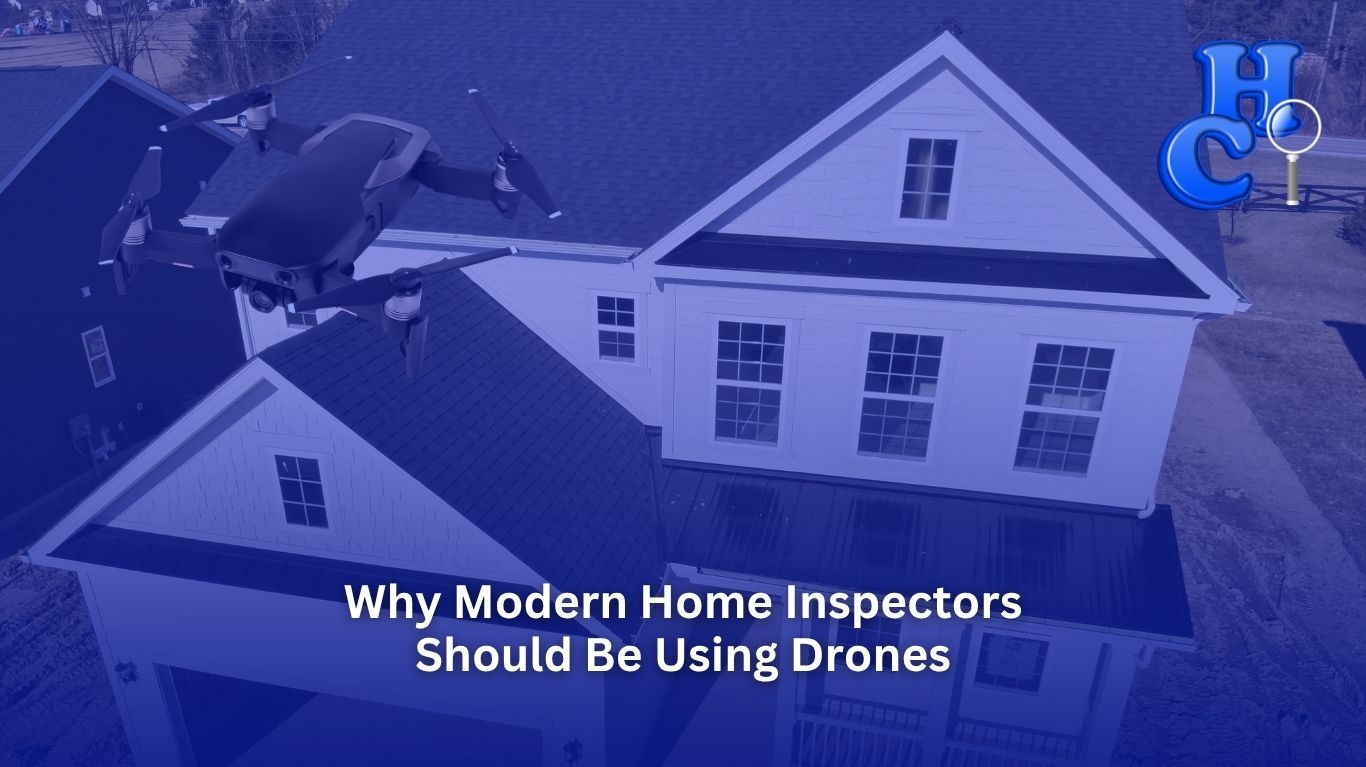
While Ohio’s Standards of Practice may not specifically require a drone, that does not mean drone technology should be ignored. In many situations, drones provide critical visibility that simply cannot be achieved safely or effectively from the ground alone.
Recently, we inspected a property after another inspection company had already evaluated the home. The prior inspector reportedly advised the client that using a drone was not part of the Ohio Standards of Practice. Unfortunately, important defects were missed that later created major concerns for the seller and buyer.
The Roof Told a Different Story
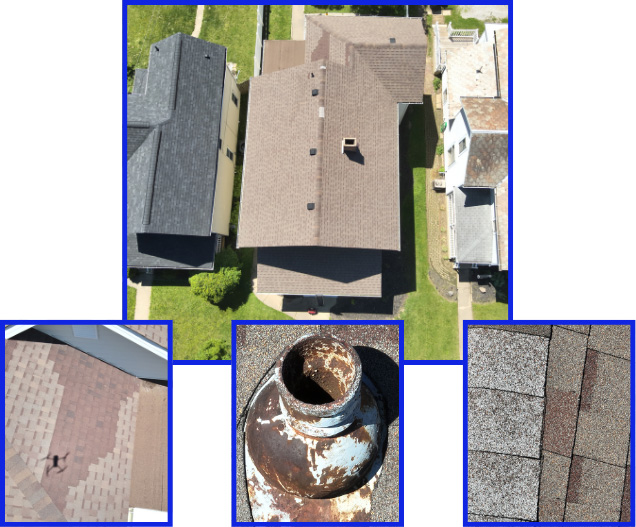
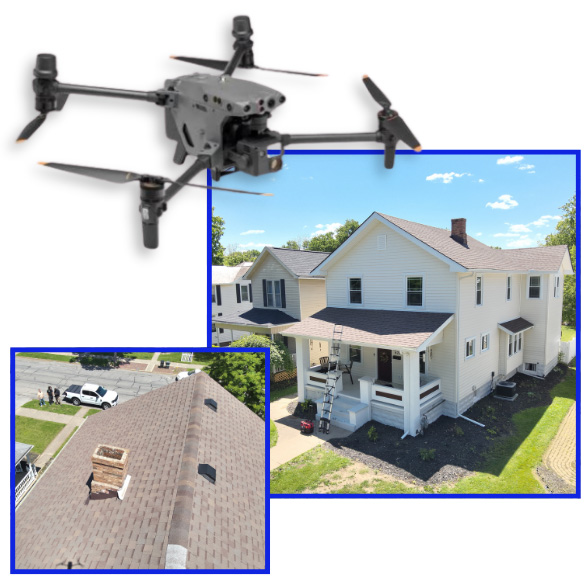
From the ground and from a ladder at the lower front porch roof, the shingles appeared newer and in relatively acceptable condition. However, after launching our FAA Part 107 licensed inspection drone, a completely different picture emerged.
Significant granule loss
Advanced aging
Multiple prior repairs and patching
Deteriorated roofing materials
Areas nearing the end of service life
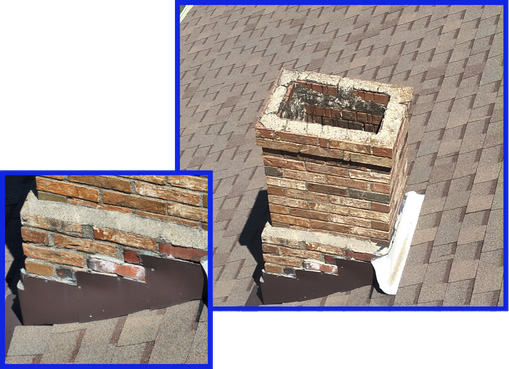
Chimney flashing leaking
Chimney liner missing
The key benefit? It’s completely non-invasive. Walls don’t need to be opened, and floors don’t need to be lifted. Yet it can still reveal problems that would otherwise stay hidden.
Additionally, the rear low-slope roll roofing system exhibited substantial wear and granule deterioration that was not visible from the accessible lower roof areas. Without the drone inspection, these conditions could have easily remained undiscovered.
The Problems Did Not Stop at the Roof
As the inspection continued, additional issues connected back to the roofing system and chimney assembly became apparent.
The chimney flashing showed evidence of leakage, and the chimney itself was unlined. Inside the attic, moisture staining and efflorescence were visible around the chimney structure, indicating prolonged moisture intrusion.
Water intrusion through failed flashing and chimney deficiencies can create a chain reaction of problems throughout a home. In this case, moisture migration contributed to elevated humidity conditions within the basement area, ultimately creating an environment conducive to microbial growth. What initially appeared to be “just a roof issue” became a much larger building performance and moisture management problem.
Small Misses Can Become Expensive Problems
This is why technology matters during a home inspection. Many significant defects occur in areas that are:
Difficult to access
Unsafe to walk
Too steep for direct inspection
Obstructed from ladder access
Not visible from the ground
A drone allows inspectors to safely and closely evaluate roofing systems, flashing details, chimneys, vents, drainage patterns, and other elevated components with significantly improved visibility.
In many cases, the drone imagery also provides clients with documentation they can review themselves after the inspection.
Drones Improve Safety and Visibility
Using drones is not about replacing inspection experience or knowledge. It is about improving visibility and reducing limitations.
At Home & Commercial Inspections, LLC, our FAA Part 107 licensed drone operations allow us to:
Inspect steep roofing systems
Evaluate inaccessible roof sections
Document chimney conditions
Identify damaged flashing
Observe drainage concerns
Review roof penetrations and repairs
Capture high-resolution inspection imagery
Enhance client reporting documentation
Most importantly, drones help reduce the likelihood of missing significant defects hidden from normal viewing angles.
Standards of Practice Are the Minimum
The Ohio Standards of Practice establish minimum requirements for a home inspection. They are not intended to limit inspectors from using better tools, additional technology, or more advanced inspection methods.
Buyers should understand that “meeting the minimum standard” and “performing a thorough inspection” are not always the same thing. Technology such as drones and thermal imaging can provide additional information that may not otherwise be discovered during a standard visual inspection alone.
Choosing the Right Home Inspector Matters
When hiring a home inspector in Columbus, buyers should ask:
Does the inspector use drone technology?
Is the inspector FAA Part 107 licensed?
Does the company use thermal imaging?
How are inaccessible roof areas evaluated?
What tools are used beyond the minimum standard?
A home purchase is often one of the largest investments a person will make. Missing major roofing defects, moisture intrusion, or hidden building performance issues can lead to costly repairs after closing.
At Home & Commercial Inspections LLC, we believe modern inspections require modern tools. Drones are not a gimmick — they are an important part of providing better visibility, better documentation, and better information for our clients.
James Jones has nearly 30 years of experience performing home and commercial property inspections. He specializes in environmental testing, thermal imaging, drone inspections, and building performance assessments. As a member of the Board of Directors for the American Society of Home Inspectors (ASHI), he is committed to helping homebuyers, homeowners, businesses, and investors make informed property decisions through thorough inspections and clear, actionable reporting.